Showing posts with label prompt. Show all posts

Saturday, November 9, 2013

Which time? Writing prompt for all and stress relief for National Novel Writer's Month participants.


I got to thinking today, after watching NBC's Dracula, about time periods, historical figures, and buildings, landscapes and so on. There are so many time periods and places I wish I could be a fly on the wall of. I wish I could have seen Queen Elizabeth I and England during her reign or Queen Victoria during hers. I would like to have seen the kind of lives some of my ancestors lived, how they made ends meet, where they came from, what their views were. I wish I could have seen certain places of the world before time and war had crumbled them.

So I posed a question to all of my friends on Facebook, mostly because I am curious, but also because as I was writing it, I thought perhaps this would be a good time to convert the question into a writing prompt. I left it open for those who just want to give short answers and for those who want to take a break from Nano and write something short and easy. So here's the question or rather questions:

What time period/place do you wish could visit, if it were possible for you to go?
What would you most like to see and what would you like to do while there?
Who would you like to meet in person if there is or was someone you'd like to meet?

And to add another element to the questions, first write this as if you couldn't do anything to change history, because if you did, it would disrupt everything. Then, write it as if it wouldn't matter if you changed history, if you could change history, but remember there are consequences to every action. How do you think your changing things will shape the future?

Saturday, April 27, 2013

Guided Prompts

So I have a fun idea to get away from the blank page syndrome (a.k.a. writer's block, a.k.a. I-dunno-how-to-start-this-really-cool-idea).  Looking back at my writing history I realize that I write better (or at least more profusely) when working off a prompt.  This is why Role Play story writing is so successful.  Each time you interchange with a partner, it is essentially them giving you a prompt.  For any of you out there that might not know what Role Play (RP) writing is, it is just as the name suggests.  You write (in third person) the experiences and thoughts of a single character performing an act or a series of acts and then you have a writing partner have their character react to what you wrote.  It's a fun back and forth that is not only great writing practice but wonderful at helping you build and develop characters.  One of the reason's it's so fun and so successful is because you are kept wondering what your partner will write because that is your next prompt.

Back when Yahoo!360 was an active site (may it rest in peace), I used to write a few short segments based on prompts I found on sites like Writer's Digest.  One such story was about a person receiving a text from an unknown number.  I pumped out a generous amount for such a tiny prompt and had thoughts to even take it further.  Now, when I say 'prompt' it doesn't necessarily have to be 'It was a dark and stormy night when Mrs. Winters went outside to look for Pooky and found...' like that.  I mean even a self prompt like 'what would I do if I won the lottery.'  Things like that to get the juices going.  And this brings me to the point of this blog post: guided prompts.  If you have an idea and you want to write about it but aren't sure how to get started, try prompting yourself into scenes.

I have an android piece that I am itching to work on and so far I have about five different beginnings, all of which I despise and I know that it's because I'm putting too much pressure on myself to make it 'perfect' and I'm not letting myself just relax and write (which is kind of the point of writing, right?).  So what I'm going to do is give myself specific prompts.

Idea: Dystopian Android Tribe

Prompt: Leader of Android Tribe comes across a dead human.  What does he do?

Prompt: Androids find a baby and attempt to raise it.

Prompt: Androids think of themselves as 'living,' how do they react when someone tells them they have no value and are just pieces of machinery?

Prompt: Show the androids breaking or following the three laws of Robotics.

Prompt: Do androids really dream of electric sheep?

Prompt: It was a dark and stormy night... wait... no, I meant: one of the androids falls into disrepair, how do the androids react to the 'death' of one of their own?

These are all scenes that could potentially work themselves into the book, but the real purpose of these prompts is to get me somewhere in character and plot development and, ultimately, to get words on the page.  I will most likely be answering some of these tomorrow and posting them on my Gurgle Burp blog.   I know that the idea as I've written it is very vague (trust me I do have a bit more of a plan in mind than just that), but if you have any prompts for that idea, please post them and I will attempt to answer them as well!  Prompts are fun, dang it.  They shouldn't just be used to generate ideas, they can also be employed to fuel ideas that are already hatched and eager for development.


Amanda LaFantasie (Skoora) © April 2013

Sunday, November 11, 2012

PROMPT - Take it outside: Scene Exercise


(all images used are free domain)

One of the hardest challenges for writers is capturing landscape.  Because landscape is so much more than just trees and hills. Landscape has shape, colors, facets, and smells. Landscape has atmosphere. You can take as much from the landscape as you can a character, and you can use that landscape to characterize said character.  So I come with a challenge for all of you.

Take it outside. This can be either figuratively or literally.  If you don't want to go outside, because I know it's cold with winter looming, find a photograph and just look at it for five or ten minutes. Take in the way the light filters through leaves and branches, or how the breeze seems to have lifted the leaves even though you can't feel it. How does the grass sway. Is there a path? How does it look? Mountains, are they jagged and covered in snow? Or are they smooth and dusty? Once you find a landscape that pulls to you, start writing, write anything, anywhere, but make sure you have a character. Use the land to characterize said character.  How does your character feel in the landscape, how does he/she walk or move within the land. What do they look like within the land? Does the land compliment them or distress them?

If you can, because I'm not a stickler for literary fiction, bring mythological or magical elements in. How does the land itself accept this character. Are there challenges keeping the character out, or is it trying to bring her/him in? The point is, use the land in a way you might not usually. Make the land your primary focus in this scene. Let the land build your character rather than the other way around.

Most importantly though, have fun with it!

I am going to do this prompt later today, and in the near future I shall share my results.


Some keywords to get you started: Towering, light, rainbow, silhouette, wispy, shadow, darkness, frail, firm, stagnant, glistening.

Helpful hints: If you can, use metaphor to build your landscape, or even personification. Make the land a character in itself. 

~ Beth


Sunday, October 7, 2012

Prompt - Stanza Story

Sometimes professors have the coolest prompts.

Last week our class was assigned a prompt to write a story based off of a stanza from a famous poem.  So I want to challenge you all to do the same.  The poem we were provided was, "Resurrection of the Dust," by John McKernan, because of copyright issues, I will not be using this poem, but rather a classical work, that has no risk of Copyright infringement. So for this prompt I shall use "The Phoenix and the Turtle," by William Shakespeare.

The purpose of this poem is to choose one stanza. That stanza will be the beginning of your story.  You should challenge yourself by limiting your story to one or two pages.  Practice quick and concise writing, however, if you go over, that is okay too!

The Phoenix and the Turtle
By William Shakespeare
Retrieved from here.

The Phoenix and the Turtle

Let the bird of loudest lay
On the sole Arabian tree,
Herald sad and trumpet be,
To whose sound chaste wings obey.
But thou shrieking harbinger,
Foul precurrer of the fiend,
Augur of the fever's end,
To this troop come thou not near.

From this session interdict
Every fowl of tyrant wing
Save the eagle, feather'd king:
Keep the obsequy so strict.

Let the priest in surplice white
That defunctive music can,
Be the death-divining swan,
Lest the requiem lack his right.

And thou, treble-dated crow,
That thy sable gender mak'st
With the breath thou giv'st and tak'st,
'Mongst our mourners shalt thou go.

Here the anthem doth commence:—
Love and constancy is dead;
Phoenix and the turtle fled
In a mutual flame from hence.

So they loved, as love in twain
Had the essence but in one;
Two distincts, division none;
Number there in love was slain.

Hearts remote, yet not asunder;
Distance, and no space was seen
'Twixt the turtle and his queen:
But in them it were a wonder.

So between them love did shine,
That the turtle saw his right
Flaming in the phoenix' sight;
Either was the other's mine.

Property was thus appall'd,
That the self was not the same;
Single nature's double name
Neither two nor one was call'd.

Reason, in itself confounded,
Saw division grow together;
To themselves yet either neither;
Simple were so well compounded,

That it cried, 'How true a twain
Seemeth this concordant one!
Love hath reason, reason none
If what parts can so remain.'

Whereupon it made this threne
To the phoenix and the dove,
Co-supremes and stars of love,
As chorus to their tragic scene.

THRENOS

BEAUTY, truth, and rarity,
Grace in all simplicity,
Here enclosed in cinders lie.

Death is now the phoenix' nest;
And the turtle's loyal breast
To eternity doth rest,

Leaving no posterity:
'Twas not their infirmity,
It was married chastity.

Truth may seem, but cannot be;
Beauty brag, but 'tis not she;
Truth and beauty buried be.

To this urn let those repair
That are either true or fair;

For these dead birds sigh a prayer. 

Obviously a problem arises in that this is not a modern poem, so your story may take the feel of this poem. Feel free to use the stanza in quote form.  Use it for characterization, whatever purpose you need.  Just have fun with it. If this poem is too difficult, choose a different one. Just keep in mind copyright laws when you do so. 

~Beth

Saturday, October 6, 2012

Writing Prompt: Fact or Fiction - Research

I am always fascinated with discoveries being made in the art world. And these past few weeks have been full of juicy thoughts with the "discovery" of a new painting from a master. Recently, people claim that a new Leonardo da Vinci has been discovered, a younger, fresher faced Mona Lisa called the Isleworth Mona Lisa.

It is exciting, there is a newly found word from a master. But is it real? Did da Vinci paint the Isleworth Mona Lisa? Is it a cleaver forgery from a contemporary?
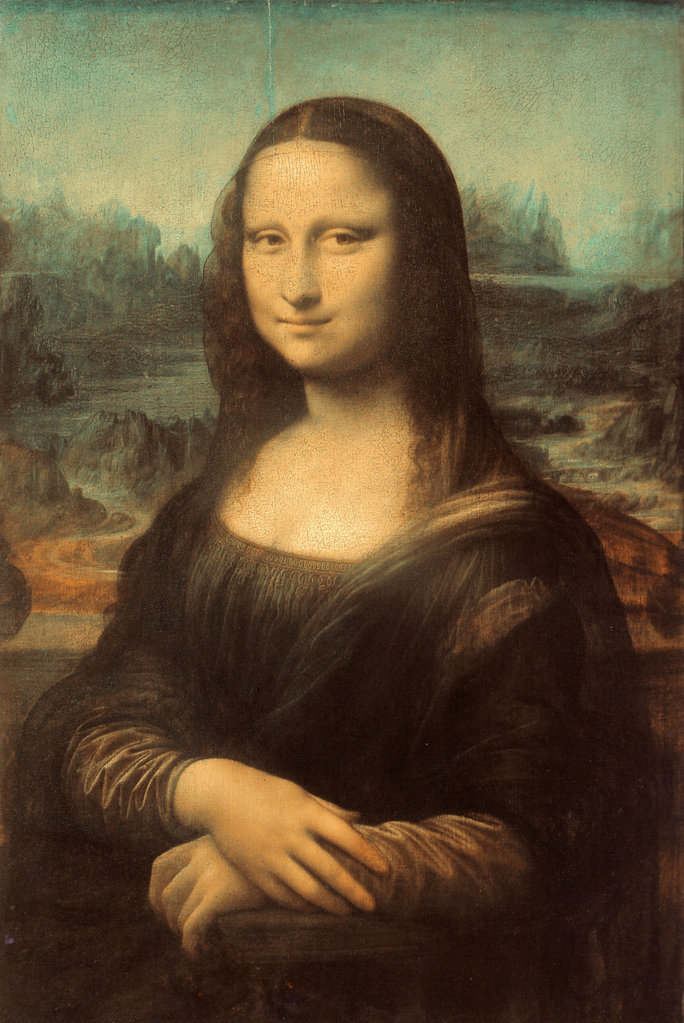
Mona Lisa

How would you go about proving your theory? Research - a necessity if one aims to be a good writer. You have to know your facts before you can write about anything. There are plus and minus aspects to research though.


?
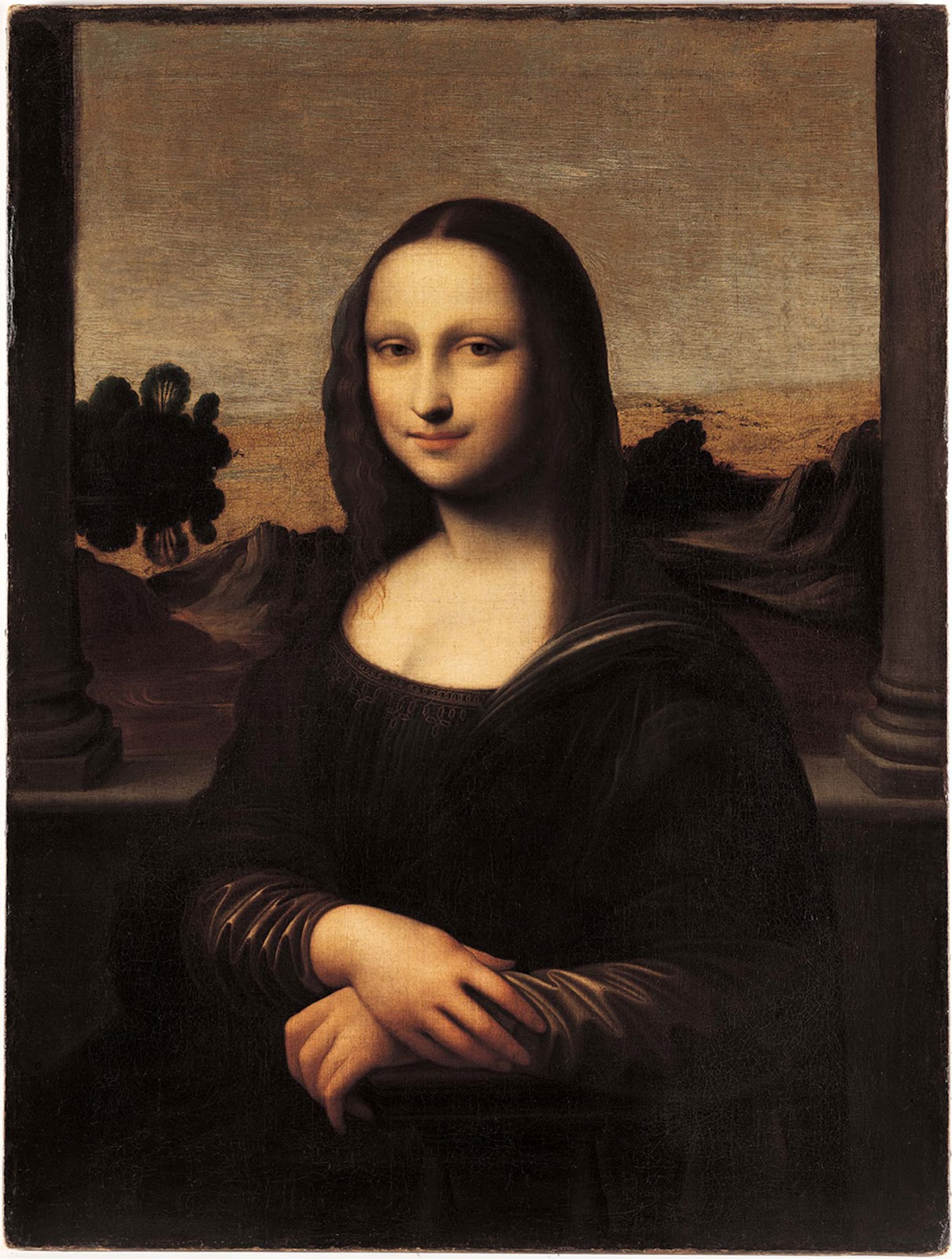
The Isleworth Mona Lisa


Where does one go to research art authentication/forgery? Anyone can get online and get facts. Whether those facts are correct is another matter. While the internet is good for gathering quick information, you have to ask yourself if it is reliable. Do you trust the source? How many websites did you investigate?

I believe that every writer needs to use a mix of sources, least of them being the internet. Books, journals, magazine articles, and people who are familiar with your subject are usually the best way to go. And yes, many journals and magazines are available online - but scholarly material is very different than a tumblr site with an opinion written by a conspiracy theorist.

Writers also need to have a working understanding of their subject. Using the Mona Lisa's as an example, you as the writer need to know about various art techniques and theory. What is the base of the painting? Was there a sketch involved? What paints were used? What about brushstrokes? Lighting? Texture? If the writer does not understand the basics, how can the reader understand them? And what about the reader who is well versed in art? If you do not know your subject, no one will take your work seriously.

Now, there will always be naysayers in whatever subject you chose. Especially when it comes to art, and the art of one of the masters. If a person were to write about these two paintings, the writer would first have to take a side. Say the writer thinks the newly discovered painting is not da Vinci's work. How does the writer tell the reader why it's fake?

Through evidence the writer finds through not only examining the works, but by knowing the era of the known work. The writer needs to convey how the paints were created, what was mixed in the oils to make certain shades. The writer needs to show the differences between the paintings: materials used and techniques. For example, the Mona Lisa was painted on wood, whereas the Isleworth Mona Lisa is painted on canvas.

WRITING EXERCISE: Think of an item, be it art, historical letters, an unfinished manuscript, that has been found. The person/people that have found this item claim it is authentic, an original work worth millions of dollars. How would you go about collecting the evidence to form your own opinion? How would you sway others to believe your argument? Think about the research involved, and outline your approach.

This might lead you to a fascinating tale of intrigue in the art world.  


Tuesday, September 25, 2012

prompt-List of Truths

The Pocket Muse's Ten Commandments post, reminded me of this prompt from my first creative writing class in high school. This is also a prompt that I come back to every so often and re-do or re-read. It's amazing what values change and what don't.

Create a list of life's truths. Everything and anything can be included. These are YOUR truths. Pull from your experience and view point to create this list.

Beth's Prompt - Your Story's Song


Hello, thank you all for your kind welcomes to Detangled Writers, I am so happy to be here!  I was personally requested by Skoora to share this prompt with you all and I thought it would be a fitting first post.  This is a prompt I first tried in my Beginner's Fiction Writing class several years back.

The Challenge 

  1. Pick a song. Preferably a song that is not well known, overdone, famous or popular. (i.e. avoid bands such as Linkin Park, Evanescence, Skid row, etc.
  2. Make sure that the song has lyrics, this is crucial.  
    • A lot of good writing comes from classical compositions, however this is a prompt meant to be challenging, so adding the influence of lyrics will challenge you as a writer.
  3. Finally procure a prompt. The best way I've found to do this is have a friend suggest both the song and the prompt, or pick a song yourself and then go to a theme generator and randomly generate a prompt. This is a project meant to get you out of your comfort zone however it is also meant to be fun so just make sure to enjoy the prompt.  
Let me share a few examples, one is the prompt that Skoora herself gave me when I requested this prompt on my personal blog. This was a beautiful example, and this is a story that I am working on currently. This prompt is ambiguous in what it wants. 
Ex.) SONG: Donovan's, "There Is An Ocean." PROMPT: A man reflects on a battle (any battle you can conceive of) and as he walks through the quiet battlefield, he touches things (weapons, clothes, dead bodies prior to being carted away, etc.) and when he touches these things, he can see the past of these objects. Let the objects tell the story of why there was a battle. 
This next one is a less abstract prompt that tells you exactly what it wants.

Ex.) Emily Autumn's, "I Want My Innocence Back." - Write about the kidnapping of a child and the lengths a mother/father will go save that child.  
 The prompts may be as simple or complex as you want them to be. Challenge yourself. If you want to make it more difficult try to make the prompts and the song have a dichotomy - not the exact meaning, contradiction, etc.  Some ways to go about this is make your prose poetic.  To include lyrics from the song.  To use the lyrics to build dialog, or to use song lyrics to set up a scene and theme. Stephen King's, The Stand, is famous for using this technique in order to create abstract themes throughout the book.

Another famous Author, Joyce Carol Oates, dedicated a story to Bob Dylan, the short story is entitled, Where Are You Going, Where Have You Been? - For Bob Dylan, This story focuses on the late 1960's, early 1970's when stranger danger became a realized threat in the United States. This story is widely available on PDF if you are interested in reading a wonderful example of music in prose.  Oates used an interesting technique of having the antagonist quotes songs in his natural speech, something very different than King's use of throwing songs into a scene, such as on a radio or The Walking Man singing.

Both are very creative uses of music to foster writing, and so I challenge you to try this yourself, and of course have fun!

Links:
Where Are You Going, Where Have You Been? For Bob Dylan If there is any problem with me sharing this story here I will immediately remove it.  If not, please enjoy it. The Stand, can be found at any library or bookstore for those who have not read it yet and would like to. 
Music is the Life of a Writer This is the original blog post about this topic if you'd like further information on the premise of this prompt. 

Monday, September 24, 2012

Prompt-Scrabble Game


This prompt I got from my advanced creative writing class in high school.
Play a game of Scrabble or Words with Friends. Write down all the words that were played and create a short story using all of the words.

Easier: Just write down and use the words that you used.

Thursday, September 13, 2012

Random Syntax prompt from Natalie Goldberg


Try this. Take one of your most boring pieces of writing and choose from three or four consecutive lines or sentences and write them at the top of a blank piece of paper.

Okay. See each one of those words simply as wooden blocks, all the same size and color. No noun or verb has any more value than the, a, and. Everything is equal. Now for about a third of a page scramble them up as though you were just moving wooden blocks around. Don’t try to make any sense of what you write down. Your mind will keep trying to construct something. Hold back that urge, relax, and mindlessly write down the words. You will have to repeat words to fill a third of a page.

Now if you would like, arbitrarily put in a few periods, a question mark, maybe an exclamation mark, colons, or semicolons. Do all of this without thinking, without trying to make any sense. Just for fun.

Now read it aloud as though it were saying something. Your voice should have inflection and expression. You might try reading it in an angry voice, an exuberant, sad, whining, petulant, or demanding voice, to help you get into it.
Excerpt from Natalie Goldberg's Writing Down The Bones: Freeing the Writer Within
Goldberg, Natalie. Writing Down The Bones: Freeing the Writer Within. Boston: Shambhala, 1986


Wednesday, September 12, 2012

What are your deep dreams? prompt by Natalie Goldberg


Deep Dream painted by Javier Martinez
I asked my Sunday-night group (many of whom had been doing practice writing for three years), “Where do you want to go with writing? You have this strong creative voice; you’ve been able to separate out the creator and editor. What do you want to do with it?”


There comes a time to shape and direct the force we have learned. I asked them, “What are your deep dreams? Write for five minutes.” Many of us don’t know, don’t recognize, avoid our deep dreams. When we write for five, ten minutes we are forced to put down wishes that float around in our mind and that we might not pay attention to. It is an opportunity to write down, without thinking, wishes at the periphery of our perceptions.

Reread them. Start to take your dreams and writers seriously. If you’re not sure, if you honestly don’t know what you want to do, start wishing for a direction, for your way to appear.


Excerpt from Natalie Goldberg's Writing Down The Bones: Freeing the Writer Within
Goldberg, Natalie. Writing Down The Bones: Freeing the Writer Within. Boston: Shambhala, 1986


Tuesday, September 11, 2012

Obsession List prompt from Natalie Goldberg


Every once in a while I make a list of my obsessions. Some obsessions change and there are always more. Some are thankfully forgotten.

Writers end up writing about their obsessions. Things that haunt them; things they can’t forget; stories they carry in their bodies waiting to be released.

I have my writing groups make lists of their obsessions so that they can see what they unconsciously (and consciously) spend their waking hours thinking about. After you write them down you can put them to good use. You have a list of things to write about.
 
Excerpt from Natalie Goldberg's Wild Writing Down The Bones: Freeing the Writer Within
Goldberg, Natalie. Writing Down The Bones: Freeing the Writer Within. Boston: Shambhala, 1986

Thursday, September 6, 2012

Waiting to Read Write prompt from Natalie Goldberg


*Dani's notes- though I do believe in writing and not reading until later, I don't necessarily agree with Goldberg's time table. Feel free to revise this prompt so the timing works for you. write a week and go back to it a week later. Really you want to just give yourself enough time to distance yourself from your writing.*
Write every day for ten days in a row. Do not reread anything you have written for those ten days until two weeks later.

Then sit down in a comfortable chair and have a soft heart and read with interest and compassion what you have written. Underline sentences that stand out. Use those sentences as first lines for future writing practice. Put parentheses around sections you like. Develop those sections, if you want, not by reworking them but by re-entering them with more timed writing practice.
And be brave. Let some of the good writing go. Don’t worry. There’ll be lots of it over time. You can’t use all of it. Be generous and allow some of it to lie fallow. What a relief! We can write well and let it go. That’s just as good as writing poorly and letting it go. Just let go.


Excerpt from Natalie Goldberg's Wild Mind: Living the Writer's Life
Goldberg, Natalie. Wild Mind: Living the Writer's Life. New York: Bantam Books, 1990

Wednesday, September 5, 2012

I remember prompt from Wild Mind


**Note from Dani: When I first came across this exercise, I thought it was vanilla. However, I have to admit that this is my 'go to' exercise for free writing that I have repeated many times.**
Do a timed writing for ten minutes. Begin it with “I remember” and keep going. Every time you get stuck and feel you have nothing to say, write, “I remember” again and keep going. To begin with “I remember” does not mean you have to write only about your past. Once you get going, you follow your own mind where it takes you. You can fall into one memory of your mother’s teeth for ten minutes of writing or you can list lots of short memories. The memory can be something that happened five seconds ago. When you write memory, it isn’t in the past anyway. It’s alive right now.

Okay, after the ten minutes, stop. Walk around your kitchen table or get a piece of leftover fish from last night’s dinner to nibble on, but don’t talk. Now go for another ten minutes. This time, begin with “I don’t remember” and keep going. This is good. It gets to the underbelly of your mind, the blank, dark spaces of your thoughts.

Sometimes we write along one highway of “I remember,” seat-belt ourselves in and drive. Using the negative, “I don’t remember,” allows us to make a U-turn and see how things look in the night. What are the things you don’t care to remember, have repressed, but remember underneath all the same?

Now try “I’m thinking of” for ten minutes. Then, “I’m not thinking of” for ten minutes. Write beginning with “I know,” then “I don’t know,” for ten minutes. The list is endless: “I am, I’m not”; “I want, I don’t want”; “I feel, I don’t feel.”

I use these for warm-ups. It stretches my mind in positive and negative directions, in obvious and hidden places, in the conscious and the unconscious. It also is a chance to survey my mind and limber me up before I direct my thoughts to whatever I am working on.
Excerpt from Natalie Goldberg's Wild Mind: Living the Writer's Life
Goldberg, Natalie. Wild Mind: Living the Writer's Life. New York: Bantam Books, 1990

Natalie Goldberg


Natalie Goldberg--if you have ever picked up a 'how to write' book, you have come across this name millions of times. Natalie Goldberg is one of the top gurus for workshops, crafting writing, and everything else that is part of the creative generating process.
When I attended Deb McLeod's Novel Boot Camp Seminar a few weeks ago, I learned that Natalie Goldberg is actually the founder of free writing (the activity of placing pen to paper for a solid time limit without worry of logic or grammar). Also, I learned that clustering (or webbing) came out around the same time in the 80's. Oddly enough, it never occurred to me that these techniques wouldn't have existed before-- that someone, some generation, had to come up with these ideas.

In any case, the next few weeks of prompts will be coming from Natalie Goldberg's  Wild Mind: Living the Writer's  Life and Writing Down the Bones: Freeing the Writer Within.


Saturday, September 1, 2012

Aimee's writing prompt 1.

Think of all of the random objects we use everyday. Craft items, tools, utensils. Or think of all of the knick-knacks that we all seem to accumulate over the years: decorative boxes, resin figures, dolls, toys. 

Now imagine that you are an archaeologist a thousand years in the future, and you are examining these odds and ends. You do not know what they are, how they were used, or why people had them. It is your job to figure out the reason behind, let's say, the infamous rubber duck.

Write about a few of these items, re-imagining their uses and purposes.

Monday, August 27, 2012

Character Building Sheet and Related Links

The following is a very thorough character building form that was emailed to me some time ago by a good friend and fellow writer/blogger.  It's a tool that you can personalize for your own needs: add to it, subtract from it, expound here and minimize there, and hopefully flesh out a good basis for your character.  You can create a character from scratch (if you want to spice things up a bit you can flip a coin or roll some dice to help you decide on the basics), or you can take a character that you already know very well (or think you know) and fill this out for them to see just how well you really know him/her/it.  At the end there are some character specific creative prompts as well as room for notes.  I recommend/challenge us all to apply this to one of our preexisting characters, or to use it to create someone brand new.  For further character sheet exploration you can check out this Blank PDF Form or take a gander at this awesome website complete with numerous helpful character building links.


General

Name ( Title, Given, Middle, Surname, Suffix ):
Alias ( Title, Given, Middle, Surname, Suffix )/( Alternate )/( Nickname ):
Age:
Birthdate:
Sign/Omen ( Astrological, Chinese, etc ):
Current Residence:
Birth Place:
Hometown:
Allegiance:
Belief/Religion:
Titles/Honorifics:
Profession:
Hobby:

Physical

Sex:

Racial

  • Race:
  • Sub-Race:
    • Strengths:
    • Weaknesses:

Physical Characteristics (subdivided as needed)

  • Height:
  • Weight:
  • Build:
  • Measurements:
  • Hair ( Color/Style ):
  • Eyes ( Right/Left ):
  • Skin/Fur/Scales/Etc ( Color/Pattern ):
  • Handedness: [ Left/Right/Ambidextrous ]
  • Marks
    • Birthmarks:
    • Natural:
    • Scars:
    • Tattoos:
Basic Description:
Disabilities:
Fashion:
  • Primary Outfit:
  • Secondary Outfit:
  • Occasion Specific Outfit:
  • Location Specific Outfit:

Internal Biology

  • Blood Type:

Possessions

  • Most Prized Possessions (Material Value):
    • 1)
    • 2)
    • 3)
  • Most Prized Possessions (Emotional Value):
    • 1)
    • 2)
    • 3)

Background

Summary/Background:
Family Background:
History:
Education:

Psychology

Gender:
Personality:
Likes:
Dislikes:
Goals:
Life's Ambition ( Single greatest goal ):
Fears:
Crippling Fear ( Single Biggest Fear):
Least Outspoken About:
Most Outspoken About:
Vernacular ( Way of speaking ):
Mannerisms ( Behavior quirks or traits ):
Psychological Condition:
Aptitudes:
Superstitions:
Morals:
Positive Characteristics:
Negative Characteristics:

Social Interaction

Relationships ( With who, and what kind )
            (Family/Relatives/Friends/Coworkers/Associates/Acquaintances/Rivals ):
Reaction to meeting new people who are ( Good/Evil/Neutral/Young/Old/Younger than self/Older than self/Other):
Social Pressures/Problems:
Other Pressures/Problems:
General Public Behavior:
Manners:

Sayings

Catchphrase ( General / Personal ):
Favorite Sayings:
Quote:
General Philosophy:
Least Favorite Sayings:

Likes / Dislikes

[Subject] ( Obsessed / Likes / Neutral / Dislikes / Repulsed ):
[ Explanation ]
Examples:
  • Food
  • Television Show
  • Animal
  • Movie
  • Book

Ability

Languages:
  • Normal
  • Physical
  • Extraordinary
  • Technological
  • Supernatural
  • Magic
  • Psionic

History


Getting to Know Your Character (Prompts)
Relationship: (How would a spouse, significant other, friend, family describe the characters)
  • Significant Other (if they have one)
  • Friendship
  • Parent (if they have one)
  • Sibling (if they have one)
  • Arch Nemesis
  • Random Homeless Man on the Street (Omniscient Limited)
Scene Placements: (write a scene for each once sentence promt given)
  • Conflict Situation (this can be verbal or physical)
  • First Date
  • In trouble with the law
  • Learning a Important Secret (would they reveal it, or keep it to the death?)
  • Walking by a burning house, what would they do?
  • The First thing they remember
  • The Last thing they remember
  • Heard someone is spreading rumors about them, how do they physically react?
Internal Thinking:
  • Have them think about the meaning of life?
  • Have them think about religion.
  • Have them think about Justice, is it there for everyone, is it not?
  • They have a love interest, have them think about approaching said person.
  • Just had a fight, what is their internal conflict/resolve after?
  • Heard someone is spreading rumors about them, how do they internally react?
Anything Else You Want!
Notes:


Amanda LaFantasie (Skoora) © 2012

Wednesday, August 22, 2012

Prompt-random free word

Easy:
Start with the word 'tree.' Add ellipses until you think of another word, phrase, or picture. Do this as a freewrite for 5 minutes.

example: tree... lights...stop...moving...stand...up....air...balloon...red...lipstick...kisses...doggie...Remi...Big Ears...bunny...Easter...fake green grass.

Harder:
Start with the word 'tree.' Add ellipses until you think of another word. Do this as a freewrite for 5 minutes. Highlight your favorite words, and create a poem that includes those highlighted words.

Tuesday, August 21, 2012

Monday, August 20, 2012

Images and Songs and Writing (not entirely work safe)


The following are some pictures and some songs (just a few that I had handy) that may or may not awaken anything in your creative mind, but just like in improvisational acting, it's always better to say yes than no.  'No' limits us and 'yes' frees us artistically speaking.  So why not have a look and a listen and see if you can pick up what I'm currently putting down?

*

First image: I simply love pictures/renderings of little children juxtaposed with something dark and almost nightmarish.  It's the obvious implication of innocence and corruption but it's even more because the little child in question finds strength from whatever menacing/powerful creature they are near.  Kind of an interesting idea to ponder. 


Second image: Homo eroticism, which, let's face it, I am somewhat obsessed with.  It's not that I don't enjoy and find value in the traditional partnership of masculine and feminine, because I do (I love all eroticism and romance elements), but homo erotic things really push my tingly buttons and this image is interesting because of the artistic value found within.  A picture is worth a thousand words, isn't that right?  Also, I want their chain veils!  


This next image: Something fun to do - though it does waste some time in the grand scheme of things - is to go and google Doll Generators and Dress Up Games then play around with the designs until you create something yourself that appeals to your artistic authorship.  This is one of many little dolls that I designed on one such doll generator.  You can make something or someone that resembles a character you are working on and that might be a healthy way to stir up some creative juices.


Doll Dress Up Games

These are just a few pictures, I have scores and scores more, some of them saved on the computer, some of them hanging on my walls and all of these things, I hope, foster a visually stirring atmosphere in which to work and live and dream and all that good stuff.

*

What follows now are some songs that bring up intense images either via their lyrics or their instrumentation and composition.  Enjoy: 


What are some pictures and songs that inspire you?  Did any of the pictures or songs create images or ideas in your head?  Did you check out the doll generator?  Please share your thoughts or images.  Do you think that visual and audio media (not necessarily these images and songs, but just in general) help you or hinder you in the creative process?  


Amanda LaFantasie (Skoora) © 2012

Response to Dani's "Story-Cube Wedding Day" Prompt

Someday, I want to get married.  Someday I want to dress up in a big fancy dress - it might be black with tentacles draped off of it, it might be white with bling all over the bodice, it might be a regal ball gown or even something that I helped to sew myself, but it will be fancy and big - and I want to stand before my girl friend and fill in the blank speech bubble of vows with all the things that I will promise to do and try to do to make her life with me one that she won't regret.  The scales are not in our favor when it comes to such plans, however.  They are tipped toward poverty (which is a difficult hurdle in and of itself) but more than that, we are faced with the reality that our marriage would be one of words and not of legality.  Also there is the issue of Crim's grandparents who have a very 'don't hang your dirty laundry out to for others to see' sort of take on sexuality and alternative lifestyles.  Crim has even gone so far as to wonder if we shouldn't avoid marriage until after the grandparents have passed away so as to avoid seeing their unhappy faces should word of our vows reach their ears.  It's too bad.  It would be nice if they, as well as other various family members on both our sides, would not only accept us as a couple, but eagerly attend our wedding.  But that's not the world we live in.

As much as I want to believe that we are moving forward into a time where civil rights are granted to everyone, the human race seems determined as a whole to live in the dark ages where reason comes to us in small beams of light, but these flashlights only last so long before their batteries drain, before the insistence of zealots disheartens even the most important of strides toward human rights.  We try to dress up the chaos with pretty pictures and messages of hope but it doesn't change the fact that in this country, there are still people and organizations actively fighting against same-sex marriage and seeking to not only prevent such unions but criminalize the very act of homosexuality.


Someday, though, it could happen.  I wonder sometimes if Crim will take on my name and add LaFantasie to Richardson or if it will be me who adds an R to my list of initials: AJOL.  L and R, like left and right.  She's left handed and I'm right handed, and I am the L and she is the R.  Together we're ambidextrous... or something like that.  My left hand in her right, or the other way around.  Someday, we'll stand, hand in hand, in some combination of left and right, and a man, or woman, will open a book and recite passages from a bible (maybe something from the book of Esther) or maybe it will be passages from the Necronomicon, who knows with us, but whatever is said, it is sure to inspire and confuse, just as all wedding versus have a tendency to do.  


Will things be different afterwards?  Will it make us happier?  Healthier?  Braver?  Will it be like plummeting from a plane and frantically pulling at the parachute chords only to find that we are naked and doomed to die?  Would dying be so bad if we were at least married?  I don't know.  Because I'm not married and with the way things are going in this country with human rights - rights that we ought to already have as we are humans - obtaining legal protection at the break neck speed of a turtle, it is not likely that I will know what this feels like any time soon.  I suppose there's a part of me that is eager and there's a part of me that is willing to wait.  There is no need to rush, not really.  We aren't going to be having children biologically - not unless Gerard Butler generously offers to impregnate us, which would be splendid! - and as far as adoption goes, they tend to want you to be financially solvent first.  So it's just Crim and me for now and we're together, living in sin, pruning the family tree with our decision to cleave to one another rather than seek comfort in the males of our species.  I've sought comfort there, and so has she.  But it wasn't until we found each other that we started thinking about a wedding day.  Surely that means this is right.  Why can't the rest of the world understand that?

Amanda LaFantasie (Skoora) © 2012