Showing posts with label research. Show all posts
Friday, May 23, 2014
Books I Desperately Want to Read!
My friend keeps telling me "not enough hours in the day" and she's usually correct. There simply aren't enough hours in the day to play, to read, to watch a Game of Thrones marathon, to write, and do most other fun things that we humans of the nerdy persuasion are want to do. And so, surrendering to the lack of hours in a day, I'm pushing off a pinch of homework to compile this list. These are the books that make me want more hours in the day. I'm planning on reading some this next semester, but what I really want is to already have them happily devoured and snuggling into my subconscious like the miraculous brain food I know they'll be. I own the first one and am borrowing the second one from my aunt. I reckon I'm going to just have to buy it, along with the last two, and feed my ever-increasing library. (Note: the book descriptions are taken from Amazon.com).
Mattie, an intelligent automaton skilled in the use of alchemy, finds herself caught in the middle of a conflict between gargoyles, the Mechanics, and the Alchemists. With the old order quickly giving way to the new, Mattie discovers powerful and dangerous secrets - secrets that can completely alter the balance of power in the city of Ayona. However, this doesn't sit well with Loharri, the Mechanic who created Mattie and still has the key to her heart - literally!
Geralt of Rivia is a witcher. A cunning sorcerer. A merciless assassin. And a cold-blooded killer. His sole purpose: to destroy the monsters that plague the world. But not everything monstrous-looking is evil and not everything fair is good. . . and in every fairy tale there is a grain of truth. The international hit that inspired the video game: The Witcher.
Eight Neanderthals encounter another race of beings like themselves, yet strangely different. This new race, Homo sapiens, fascinating in their skills and sophistication, terrifying in their cruelty, sense of guilt, and incipient corruption, spell doom for the more gentle folk whose world they will inherit. Golding, author of Lord of the Flies, won the 1983 Nobel Prize for Literature.
Winner of the 2013 Hugo award for Best Graphic Story! When two soldiers from opposite sides of a never-ending galactic war fall in love, they risk everything to bring a fragile new life into a dangerous old universe. From New York Times bestselling writer Brian K. Vaughan (Y: The Last Man, Ex Machina) and critically acclaimed artist Fiona Staples (Mystery Society, North 40), Saga is the sweeping tale of one young family fighting to find their place in the worlds. Fantasy and science fiction are wed like never before in this sexy, subversive drama for adults.
Thursday, October 31, 2013
NaNoWriMo Time!
It's that time again! National Novel's Writer Month, or NaNoWriMo, is here. It starts midnight tonight. I know that several members of this blog are going to be taking part this year and I thought we could do a mid month check up to see how everyone is doing and how far along they are to their 50 thousand word goals. To kick it off, I'm going to stay up and start writing in the wee first hours of November and see if I can get a good five hundred in before I crash for the night. My goal is to work on new material for my Death Man novel as well as get a start on a new novel that can work as my workshop pieces for the upcoming winter residency where I will be starting my third semester with Pine Manor College's Solstice MFA in Creative Writing.
A word of advise from me for all those out there attempting this wonderful and exciting task: make time. Steal minutes wherever you can. Even if you just have fifteen minutes between things and you think you have enough quiet or concentration to pump out a few paragraphs, then do it. Every little word counts. A book is nothing but chapters and chapters are made of pages and pages are made of paragraphs and those paragraphs are made of sentences and that's where words come in. They are the foundation of everything in literature. Keep the words coming and don't stop to edit (or at least don't stop for too long). Best of luck to my fellow NaNoWriMo participants. Ready, set, write!
Wednesday, October 30, 2013
The Importance of Imagery
This is my craft analysis for my MFA on imagery using Deliverance by James Dickey as the main source. You do not need to have read the book to read this essay and I do not believe there are any real spoilers contained within. Enjoy!
Gardner introduces the
concept of the originality of the writer’s eye in On Becoming a Novelist. Essentially, “Getting down what the writer
really cares about – setting down what the writer himself notices, as opposed
to what any fool might notice – is all that is meant by the originality of the writer’s eye”
(Gardner 71). The above passage is a
great example of that originality. This
isn’t just a river anymore; it’s Dickey’s river. It’s Ed’s river. Through his narrator, Dickey captures things
about this river that are different from ‘what any fool might notice’ and uses
these things to develop his survival theme.
Ed’s life before the river begins to merge with his life now: “outlining
a face, a kind of god, a layout for an ad, a sketch...” He sees the face of a god in recognition of
the divine power of nature and he relates it to things he knows from his job,
from his life before the canoe trip.
Only this character, presented
by this author, could view things
this way. That is the power of imagery
and the originality of the writer’s eye.
Burroway, Janet, and Susan Weinberg. Writing Fiction: A Guide to Narrative Craft. New York: Longman, 2003. Print.
Dickey, James. Deliverance. Boston: Houghton Mifflin, 1970. Print.
Gardner, John. On Becoming a Novelist. New York: W.W. Norton, 1999. Print.
Scofield, Sandra Jean. The Scene Book: A Primer for the Fiction Writer. New York: Penguin, 2007. Print.
Imagery in the
Georgia Wilderness
Some say
the devil is in the details, but when it comes to imagery, I say the
‘difference’ is in the details. Imagine
a picnic scene. Vivid, sensory
descriptions are all that stand between a Monet-esque
afternoon, and the third circle of Dante’s hell. On one hand we have gently swaying ash trees,
rolling grasses, polished silver with scalloped edges, and starched, white
doilies; on the other we have a threadbare blanket, an overcast sky, enormous
deep-fried turkey legs, an ant army descending upon a glob of jelly, and greasy
fingers digging into the basket for more.
Could very well be the same picnic, but the images give us vastly
different impressions. These
descriptions not only color our perceptions of scenes, they give us a deeper
understanding of the novel as a whole, particularly its theme.
In the
novel, Deliverance, James Dickey reinforces the Darwinian theme –
survival of the fittest, or, you have to adapt or you die – through his use of
sensory and emotional imagery. Janet
Burroway tells us in her book, Writing Fiction: A Guide to Narrative Craft, “... if you are to
realize your characters through detail, then you must be careful to select the
details that convey the characteristics essential to our understanding. You can’t convey a whole person, or a whole
action, or everything there is to be conveyed about a single moment of a single
day. You must select the significant”
(Burroway 78). This goes back to the imaginary
picnic. If the theme is ‘rich people are
slobs and pigs on the inside’ wouldn’t it be better to use the latter
description over the former? Of course
that depends on the context of the rest of the novel. Looking at Deliverance, which is a
story about survival at great physical and emotional costs, it would be strange
if the narrator, Ed, who happens to be a novice hunter, only noticed fluffy
tails, wiggling noses, and cute features when encountering animals. Those details have a time and place, but not
in this novel. The imagery in the
following passage is what separates Dickey from Disney.
“In the middle of this sound the
tent shook; the owl had hold of it in the same place. I knew this before I but the light on – it
was still in my hand, exactly as warm as I was – and saw the feet with the heel
talons now also coming in. I pulled one
hand out of the sleeping bag and saw it wander frailly up through the thin
light until a finger touched the cold reptilian nail of one talon below the
leg-scales. I had no idea of whether the
owl felt me; I thought perhaps it would fly, but it didn’t. Instead, it shifted its weight again, and the
claws on the foot I was touching loosened for a second. I slipped my forefinger between the claw and
the tent, and half around the stony toe.
The claw tightened; the strength had something nervous and tentative
about it. It tightened more, very
strongly but not painfully. I pulled
back until the hand came away, and this time the owl took off.
All night the owl kept coming back
to hunt from the top of the tent. I not
only saw his feet when he came to us; I imagined what he was doing while he was
gone, floating through the trees, seeing everything. I hunted with him as well as I could, there
in my weightlessness. The woods burned
in my head. Toward morning I could reach
up and touch the claw without turning on the light” (Dickey 89).
Nothing is
fluffy or friendly about this owl.
Dickey uses words like ‘reptilian,’ ‘stony,’ ‘claw,’ and ‘scales’ to
describe an animal that, in a different setting, might be considered cute. The image Dickey creates is that of a fit and
efficient hunter, everything that Ed wants to be, and, in the end, is forced to
become. In On Becoming a Novelist
by John Gardner, the author says that “... the writer who works closely with
detail – studying his characters’ most trivial gestures in the imagined scene
to discover exactly where the scene must go next – is the writer most likely to
persuade and awe us” (Gardner 37). So
much happens in this small scene where Ed touches the owl. Through his “most trivial gestures” we
understand, or have an idea, of what has to happen next. Already we see Ed adapting himself for
survival: “I hunted with him as well as I could,” and, “I could reach up and
touch the claw without turning on the light.”
Sandra
Scofield reminds us in her book, The Scene Book; A Primer for the Fiction
Writer, to, “... keep in mind that you want details to be part of action,
not tacked on for effect. And do
remember to engage all of the reader’s senses, not just sight” (Scofield
112). The owl passage focuses more on
touch than it does sight, but an even better example of “... integrat(ing)
description – mak(ing) it a part of the flow of the action of the scene ...”
(Scofield 111) occurs during a confrontation between the protagonists and two
men who, “... stepped out of the woods, one of them trailing a shotgun by the
barrel” (Dickey 107). The climax moment
of this confrontation occurs in sounds:
“I knelt down. As my knees hit, I heard a sound, a snap-slap
off in the woods, a sound like a rubber band popping or a sickle-blade cutting
quick. The older man was standing with
the gun barrel in his hand and no change in the stupid, advantage-taking
expression of his face, and a foot and a half of bright red arrow was shoved
forward from the middle of his chest. It
was there so suddenly it seemed to have some from within him” (Dickey 116).
While
Burroway tells us, “A detail is ‘definite’ and ‘concrete’ when it appeals to the
senses. It should be seen, heard,
smelled, tasted, or touched” (Burroway 75), Dickey often creates images using a
combination of abstract and sensual details. In the following passage there are a number of
details that help us see the river on its surface level, “... as if [we] were a
movie camera” (Gardner 71), but we also see it as Ed sees it, as something
mindless, indifferent, and uncomprehending.
“What a view, I said again. The river was blank and mindless with
beauty. It was the most glorious thing I
have ever seen. But it was not seeing,
really. For one it was not just seeing.
It was beholding. I beheld the river in its icy pit of
brightness, in its far-below sound and indifference, in it large coil and tiny
points and flashes of the moon, in its long sinuous form, in its
uncomprehending consequence. What was
there?
Only that terrific brightness. Only a couple of rocks as big as islands,
around one of which a thread of scarlet seemed to go, as though outlining a
face, a kind of god, a layout for an ad, a sketch, an element of design” (Dickey 171).
One of the
lengthier scenes in Deliverance depicts Ed climbing a mountain cliff. It is a simple enough action: man climbs
mountain. But the massive amounts of sensory detail that go into the scene’s
composition turn it into an intense conflict of man versus nature.
“I got on one knee and went cautiously
outward, rising slowly with both hands palm-up on the underside of the fissure
top. I was up, slanting backward, and I
felt along and around the bulge over my head.
To the right there was nothing I could do, but I was glad to be
back. To the left the crevice went on
beyond where I could reach, and the only thing to do was to edge along it, sidestepping
inch by inch until only my toes, very tired again, were in the crack” (Dickey
175).
“Time after time I
lay there sweating, having no handhold or foothold, the rubber of my toes
bending back against the soft rock, my hands open. Then I would begin to try and inch upward
again, moving with the most intimate motions of my body, motions I had never
dared use with Martha, or with any other human woman. Fear and a kind of enormous moon-blazing
sexuality lifted me, millimeter by millimeter” (Dickey 176).
What starts
out as ‘man climbs mountain’ turns into ‘man f***s mountain.’ It makes sense in a way. There is an enormous amount of risk and
physical exertion involved in climbing and in love making and Dickey uses this
relationship between activities to not only create a visceral image for the
reader but to also how Ed’s development in becoming a survivor. Scofield says, “... ‘description’ isn’t a
discreet element in narrative” (Scofield 111), and there is certainly nothing
discreet in Ed’s triumph over the mountain:
“It was painful, but I was going.
I was crawling, but it was no longer necessary to make love to the
cliff, to f*** it for an extra inch or two in the moonlight, for I had some
space between me and it” (Dickey 177).
The
example of the picnic from the beginning gives us a taste of the spectrum of
choices an author has to make when writing imagery into a scene, but Dickey’s
text shows without a doubt the importance of making the right choices. In The Scene Book, Scofield says, “Forget
those high school classes where you talked plot, setting, character,
theme. Those things aren’t
separate! You want your descriptions to
exist as part of action and emotion, part of the meaning of your scenes”
(Scofield 111). Imagery is just one
piece of the puzzle. It’s a piece, if
done well, that is entirely unique to each author,
and even each character, and it’s the one that makes all the
difference.
Works Cited:
Burroway, Janet, and Susan Weinberg. Writing Fiction: A Guide to Narrative Craft. New York: Longman, 2003. Print.
Dickey, James. Deliverance. Boston: Houghton Mifflin, 1970. Print.
Gardner, John. On Becoming a Novelist. New York: W.W. Norton, 1999. Print.
Scofield, Sandra Jean. The Scene Book: A Primer for the Fiction Writer. New York: Penguin, 2007. Print.
Amanda LaFantasie © October 2013
Wednesday, August 21, 2013
Language Creation
Language. What is it? A grouping of words, symbols, signs, gestures, and sounds used to communicate. Language is used everyday, from speaking to people, texting, computer programming, the posting of pictures, and so on. Suffice to say, language is important to know and understand the world around us.
But what about created worlds? What about the races and places that writers create? How do these people communicate? It is easy for an author to use their native tongue when their characters speak and think. I don't find anything wrong with that. It is easy - for some - to translate a few sentences into a different language. I do that constantly, changing English to Latin, French, Italian, and Russian. But I am a language nerd. I love various languages.
However, in my creation of worlds and races, I have backed myself into a wall of sorts. I have elves, vampires, sorcerers, witches, and so on. Each of these races have their own histories, and therefore, they need their own languages. But, how do I go about creating various languages for my races, without it sounding alien?
Tolkien is a great inspiration for language creation. Using the Elder Futhark Runes, he fashioned the Uruk Runes spoken by the Uruk-hai. The Cirth Runes - language of the Dwarves - is based upon the Anglo Saxon runic alphabet.
By following Tolkien's example, I am in the midst of creating a few languages for my various races. I am in the middle of creating a history for my vampire race. Finally figuring out where my vampires originated from, I can now use the languages from that area to create my own. For my vampires, I am mixing Elder Futhark Runes, the Lepontic (Lugano) language, and Ogham. I think that what I come up with will be fantastic, but it will take a lot of hard work.
http://www.omniglot.com/index.htm This is fantastic website all about languages. Omniglot is the online encyclopedia of writing systems and languages. It has sections on phonetics, different writing systems, and sections about conlangs - constructed languages.
Here is to making the created world a little more complete, with a language of their own.
But what about created worlds? What about the races and places that writers create? How do these people communicate? It is easy for an author to use their native tongue when their characters speak and think. I don't find anything wrong with that. It is easy - for some - to translate a few sentences into a different language. I do that constantly, changing English to Latin, French, Italian, and Russian. But I am a language nerd. I love various languages.
However, in my creation of worlds and races, I have backed myself into a wall of sorts. I have elves, vampires, sorcerers, witches, and so on. Each of these races have their own histories, and therefore, they need their own languages. But, how do I go about creating various languages for my races, without it sounding alien?
Tolkien is a great inspiration for language creation. Using the Elder Futhark Runes, he fashioned the Uruk Runes spoken by the Uruk-hai. The Cirth Runes - language of the Dwarves - is based upon the Anglo Saxon runic alphabet.
By following Tolkien's example, I am in the midst of creating a few languages for my various races. I am in the middle of creating a history for my vampire race. Finally figuring out where my vampires originated from, I can now use the languages from that area to create my own. For my vampires, I am mixing Elder Futhark Runes, the Lepontic (Lugano) language, and Ogham. I think that what I come up with will be fantastic, but it will take a lot of hard work.
http://www.omniglot.com/index.htm This is fantastic website all about languages. Omniglot is the online encyclopedia of writing systems and languages. It has sections on phonetics, different writing systems, and sections about conlangs - constructed languages.
Here is to making the created world a little more complete, with a language of their own.
Thursday, August 8, 2013
The Curious Case of the First Person Omniscient Narrator
Craft Analysis, Packet 1
Author(s): Kurt Vonnegut, John Gardner, Walter Dean Myers
Novel Title(s): Slaughterhouse-Five, Grendel, Monster
Student: Amanda LaFantasie
Semester 2, August 2013
The Curious Case of the
First Person Omniscient Narrator
What are
rules for if not for breaking, or at least bending? The Elementary school version of first person
point of view might go something like this: the main character uses the pronoun
‘I’ and the story is told completely from his or her perspective limiting us to
only what that character knows. But it
isn’t as clear as all that. The phrase,
‘I learned later,’ is just one way that authors are able to provide greater
scope to a scene where the first person narrator might fall short of giving a
solid account of the action. There are
other ways to stretch the limits of what first person narration is capable
of.
Kurt
Vonnegut, for instance, enables the narrator of Slaughterhouse-Five – a
veteran of WWII who survived the Dresden firebombing – to relay his story with a
degree of omniscience that is rare even in third person point of view. He uses a particular method to accomplish
this: a story within a story. Others
have also found ways to free themselves from the strict parameters of first
person. In Grendel, John Gardner
invokes the omniscience that one would commonly find on the stage in moments
when the first person narrator, the famous monster from the Old English poem
“Beowulf,” views the world as if it were a play. Similar to this, Walter Dean Myers broadens
the first person narrative by alternating between journal and screenplay format
in the novel Monster, wherein a sixteen-year-old boy faces the
possibility of jail time after a neighborhood robbery goes wrong.
Each of these novels warp the typical portrayal of the
first person narrative until the warping itself becomes part of the
characterization, creating a sense of detachment and revealing the mental strain
and sometimes dubious sanity of the narrator.
For any
of this to really work, the author must first establish a strong first person
voice. Chapter one of Slaughterhouse-Five
is 22 pages of ‘I’ and ‘we’ and all the traditional elements associated with a
first person POV, thus introducing the reader to the god-author who will make
himself known in further chapters. The
narrator begins with stating, “All this happened, more or less. […] I’ve
changed all the names,” and so simply sets us up for the third person story
that he wrote (a story within a story), which takes place primarily between
chapters 2 and 9 (Vonnegut 1). In
chapter 10, the first person narrative voice returns and wraps up the
experiences not only himself but of the main character from his story.
At the end of the first chapter,
the narrator prepares the audience for a leap away from the first person point
of view that they’ve just gotten used to and bring us into a story he calls The
Children’s Crusade (Vonnegut 15).
“I’ve finished my war book now.
The next one I write is going to be fun. This one is a failure, and had
to be, since it’s written by a pillar of salt.
It begins like this:
Listen:
Billy Pilgrim has come unstuck
in time.
It ends like this:
Poo-tee-weet?” (Vonnegut
22). And just as promised, the story
does begin with “Listen” and end with “Poo-tee-weet,” but what he fails to
mention is that he is not going away just because it’s Billy Pilgrim’s
story. Despite the appearance of third
person omniscience in The Children’s Crusade, the narrator continually
makes himself present through first person annotations as well as bold
assertions of authorial omniscience. During
a scene where Billy and a fellow soldier are captured by German forces, the
author mentions the sound of a dog barking.
He goes on to relay information that only a god-narrator could know saying,
“The dog, who had sounded so ferocious in the winter distances was a female
German shepherd. […] She had never been to war before. She had no idea what game was being played. Her name was Princess (Vonnegut 52). This sort of excessive trivia appears again
and again ranging from the way a stranger perceives Billy to be “in abominable
taste” to the fact that Billy and a young German guard are actually distant
cousins but that neither of them ever found that out (Vonnegut 151, 158). It is almost as if the narrator cannot
possibly keep from interfering in his own novel. When Billy is set up at the first POW camp,
he receives stamped dog tags and the narrative author, not Billy, makes this
observation: “A slave laborer from Poland had done the stamping. He was dead now. So it goes” (Vonnegut 91).
The narrator makes himself
unavoidably present throughout his ‘novel’ when he states boldly, things such
as: “It would make a good epitaph for Billy Pilgrim – and for me, too,” and,
“Now Billy and the rest were being marched into the ruins by their guards. I was there.
O’Hare was there. We had spent
the past two nights in the blind inn-keeper’s stable” (Vonnegut 121, 212). This insistence to remind the reader of his
presence is not limited only to scenes which show him in a favorable
light. The first time Vonnegut’s
narrator inserts himself into The Children’s Crusade is after Billy
Pilgrim follows the sounds of grief coming to him from the latrine where he
finds an American soldier wallowing in intestinal discomfort upon the
toilet. “That was I. That was me.
That was the author of this book,” says the narrator, in full admission
(Vonnegut 125).
Another
technique that Vonnegut employs to create an omniscient flavor to his story is
the addition of an all knowing character or characters. In Slaughterhouse-Five, this role
belongs to the Tralfamadorians, a race of aliens who see past, present, and
future simultaneously and who may or may not have kidnapped Billy Pilgrim and
kept him a zoo (Vonnegut 30). During his
time with these creatures, Billy makes an assertion that Earth’s violence will
play a part in the destruction of the universe and, to his shock, the creatures
assure him, “’We know how the universe ends –‘ said the guide, ‘and Earth has
nothing to do with it, except that it gets
wiped out, too.’ […] ‘We blow it up, experimenting with new fuels for our
flying saucers. A Tralfamadorian test
pilot presses a starter button, and the whole Universe disappears.’ So it goes”
(Vonnegut 117).
The moments of Vonnegut’s book
that tend toward a third person omniscience are the moments that solidify the first
person authorship off the war vet narrator who knows everything about every
character and about every object in his
book. While Vonnegut is responsible
for Slaughterhouse-Five, the
first person narrator is very much the author of The Children’s Crusade
and can and does get away with saying impossible to know things about side
characters and how they feel toward Billy Pilgrim. The layering of authorship – even Billy
Pilgrim becomes an author and public speaker in the story (Vonnegut 142) –
creates a certain tug on the reins, strains the reliability of the narrator and
reveals a bit of the fragmented psyche of an old man desperate to chronicle his
time as a prisoner of war.
Some of
the omniscience in Gardner’s Grendel comes from the bird’s eye view that
the title character often assumes. In
this way the world comes to him via the Shaper’s (Bard’s) songs and the
extrapolations Grendel is able to make based on what he sees and hears from the
near and far. Grendel would, “… be
watching a meadhall from high in a tree, night birds singing in the limbs below
me […]. Inside the hall I would hear the
Shaper telling of the glorious deeds of dead kings – how they’d split certain
heads, snuck away with certain precious swords and necklaces – his harp
mimicking the rush of swords, the heroes’ dying words” and through his
observations the narration becomes more and more omniscient (Gardner 34). He learns of the surrounding peoples and the
shifts in alliances and even knows somehow from his perch that “…two groups
would fight as allies […], except that now and then they betrayed each other,
one shooting the other from behind for some reason, or stealing the other
group’s gold, some midnight, or sneaking into bed with the other group’s wives
and daughters” (Gardner 37).
Just as
in Slaughterhouse-Five, Grendel’s omniscience relies heavily on
the establishment of a strong first person narration. This book, for the most part keeps true to
this form, even stating quite obviously who the narrator is such as in the
passage: “The harp turned solemn. He
[the Shaper] told of an ancient feud between two brothers which split all the
world between darkness and light. And I,
Grendel, was the dark side, he said in effect.
The terrible race God cursed” (Gardner 51). There are other places where Grendel
proclaims his own name in relation to the ‘I’ of the story it is when he begins
to say Grendel as a separate entity that things really take on an omniscient
point of view. Here is the first time
the narrator breaks from first person:
What will we call the Hrothgar-Wrecker when Hrothgar has
been wrecked?
(Do a little dance, beast. Shrug it off.
This looks like a nice place – oooh, my! – flat rock, moonlight, views
of distances! Sing!)
Pity poor Hrothgar,
Grendel’s foe!
Pity poor Grendel,
O, O, O!
Winter soon.
(whispering, whispering.
Grendel, has it occurred to you my dear that you are crazy?)
(He clasps hands delicately over his head, points the
toes of one foot – aaie! Horrible nails!! – takes a step, does a turn:
[…]
It will be winter soon.
Midway through the twelfth year of my idiotic war.
Twelve is, I hope, a holy number. Number of escapes from traps. (Gardner 91-92)
It takes
all the way until the end of the section before Grendel reclaims himself as
‘I.’ Through this technique the reader
has a clear idea of the loss of control Grendel feels and the effect it has on
his mental stability, which is, obviously, debilitating. Toward the end of the novel, Gardner
demonstrates Grendel’s emotional destruction further by ambiguously presenting
dialogue in italics, therefore making it seem either imagined or telepathic:
His syllables lick at me, chilly fire. His syllables lick… A meaningless swirl in
the stream of time, a temporary gathering of bits, a few random specks, a
cloud…Complexities: green dust, purple dust, gold. Additional refinements: sensitive dust,
copulating dust… The world is my bone-cave, I shall not want… (He laughs as he
whispers. I roll my eyes back. Flames slip out at the corners of his mouth.)
(Gardner 170)
Preceding this italicized
conversation are a myriad of places within the text where the first person
narrator moves further and further into objectivity and omniscience,
consequently moving detaching himself further and further from himself. At one point he seems to have an out of body
experience which is presented parenthetically in italics. (He
lies on the cliff-edge, scratching his belly, and thoughtfully watches his
thoughtfully watching the queen.) (Gardner 93). Gardner takes it a step further in this
strange mixture of first person commentary and third person stage play:
Theorum: Any
action (A) of the human heart must trigger an equal and opposite reaction (A1).
Such is the golden opinion of the Shaper.
And so – I watch in glee – they take in Hrothulf;
quiet as the moon, sweet scorpion,
he sits between their two and cleans his knife.
SCENE: Hrothulf in the Yard.
Hrothfulf speaks:
In ratty furs the peasants hoe their fields,
fat with stupidity, if not with flesh. (Gardner 113)
The
semi-mathematical word choice also lends itself to the omniscience of the piece
as it comes across as grossly anachronistic.
In Slaughterhouse-Five the all-knowing characters are the Tralfamadorians;
in Grendel that role belongs to the Dragon. With the inclusion of such
characters/elements into their first person narratives, both Vonnegut and
Gardner are able to make the overall concept of omniscience much more
palatable. The Dragon tells Grendel, “’Things
come and go […] That’s the gist of it.
In a billion billion billion years, everything will have come and gone
several times, in various forms. Even I
will be gone. A certain man will
absurdly kill me. A terrible pity – loss
of a remarkable form of life.
Conservationists will howl’” (Gardner 70).
There is
no alien race or dragon to unveil the past, present, and future in Walter Dean
Myer’s novel, Monster, rather this time it is through a camera lens and
a journal that the audience comes to understand what happened and what could happen to the first person
narrator, Steve Harmon. He establishes
a first person base line with a journal entry indicating, “Sometimes I feel
like I have walked into the middle of a movie.
It is a strange movie with no plot and no beginning. The movie is in black and white, and
grainy. Sometimes the camera moves in so
close that you can’t tell what is going on and you just listen to the sounds
and guess” (Myers 3).
This novel teeter-totters
between this journal format and that of a screenplay. Unlike Vonnegut’s novel, Monster does
not spend a great deal of time in the first person to start out, instead, Myers
inserts journal entries throughout, frequently and powerfully enough to keep
the audience from forgetting the narrative voice. There is another key difference between
Monster and the other two, Slaughterhouse-Five and Grendel, this
being that the first person and third person omniscient do not bleed into each
other. There are some sudden shifts
between the two forms, but Myers keeps screenplay
and journal separate. The following is an example of the omniscient
portions which are structured to resemble a screenplay:
FADE IN: INTERIOR:
Early morning in CELL BLOCK D, MANHATTAN DETENTION CENTER. Camera goes slowly down grim, gray
corridor. There are sounds of inmates
yelling from cell to cell; much of it is obscene. (Myers 7)
While
the traditional first person point of view does not make an appearance in these
segments, the narrator does find a way to insert himself without saying ‘I’ or
‘me’ but with just as much potency. The
rolling credits appear on the page in this fashion:
Starring
Steve Harmon
Produced by
Steve Harmon
Directed by
Steve Harmon
(Credits continue
to roll.)
(Myers 9)
The direction in the action line
indicates that the credits are to roll like the opening of Star Wars and while
this isn’t as direct as plastering his name all over the place, it keeps
Steve’s voice present for the audience. Something
even as simple as a line of direction can create a duality within a story. On one hand, the audience reads the bare
bones of a screenplay and on the other hand, when it comes to action lines,
they are reading only the things that Steve feels are most important concerning
his trial and that makes it almost more intimate than his journal entries. We learn of his past through scenes of the
movie:
CUT TO: FILM WORKSHOP at Stuyvesant High School. A film on a small screen is just ending. It is a class project.
[…]
We see STEVE raising his hand, looking much the same as
he does in court.
STEVE
I liked the
editing. (Myers 18-19)
Whereas we learn of his now through the journal: “Notes: I
can hardly think about the movie, I hate this place so much. But if I didn’t think of the movie I would go
crazy. All they talk about in here is
hurting people” (Myers 45). As mentioned
before, there are some quick shifts between journal and movie, and it is when
these two styles meet, but do not mix, that the audience gets an idea of the
narrator’s emotional duress as he immediately chooses to switch over to a
detached persona rather than put this court appearance into a real time journal
entry.
When we got in the court, there was a delay because the
stenographer had brought the wrong power cord.
The court officer was talking about termites.
[…]
OFFICER 1
So this guy
comes to the house and tells Vivian we got
termites. I get home and she’s all upset. I said no way
we got
termites. No way.
JUDGE
You ever see
any termites? (Myers 65)
It
becomes clear that Steve is using the movie as a way to forget that this
horrible thing is happening to him. At
one point, Steve has a death fantasy involving lethal injection and eve this
appears as part of the movie, the camera focusing on his face as imaginary
executioners put in a plug to keep him from messing his pants as he dies (Myers
73). The final movie moment of the novel
captures the fragmentation left by this false sense of security – that the
objective world (third person omniscient) doesn’t hurt as much as the
subjective one (first person limited).
CUT TO: CU of O’BRIEN.
Her lips tense; she is pensive.
She gathers her papers and moves away as STEVE, arms still outstretched,
turns toward the camera. His image is in
black and white, and the grain is nearly broken. It looks like one of the pictures they use
for psychological testing, or some strange beast, a monster.
The image freezes as last words roll and stop mid screen.
A Steve Harmon
Film (Myers 276-277)
So it goes, that breaking the
rules of first person and expanding a fairly limited point of view to the point
of omniscience has many effects on the story.
For these three novels, the most compelling effect is that of
escape. These narrators – the veteran,
Grendel, and Steve – are all prisoners in some way or other. The first one was a POW and spends much of
his life trapped in the memories of that time.
The second narrator tries and fails to understand and walk among the
humans. He becomes a prisoner of his
condition, trapped in his cave with only his mother for constant companionship. Lastly, Steve is, quite literally, a
prisoner. When he is not in court, he is
in a prison cell – guilty until proven otherwise so it seems. For each one of these characters, it is the
idea of escape that propels them toward omniscience. The drive to know and be done with it. To finally be free of their prison.
At the end of Myer’s novel,
there is an Extra’s section where the author answers various questions. When asked why he chose to use the screenplay
format, he explained, “In interviewing inmates I noticed a tendency for the
inmates to attempt to separate their self-portrayals from their crimes. In Monster I have Steve speak of himself in
the first person in his diary, but when he gets to the trial and the crime he
distances himself through the use of the screenplay” (Myers, Extras 7). What Walter Dean Myers sums up in this
response is more than just the reason why Steve hides behind the camera lens,
it is the reason for the war veteran’s story within a story and the logic of Grendel’s
stage play projections. It is why the
disintegration of first person into third is a fascinating ride for the
audience; it exemplifies humanities ever present need to cope.
Gardner, John. Grendel. New York: Vintage, 1989. Print.
Myers, Walter Dean, and Christopher Myers. Monster. New York, NY: HarperCollins, 1999. Print.
Vonnegut, Kurt. Slaughterhouse-five: Or, The Children's Crusade, a Duty-dance with Death. New York: Dell Pub., 1999. Print.
Labels:
books,
Craft,
creative writing tool,
MFA,
Point of View,
POV,
Reading,
research,
Skoora,
Writing
Wednesday, June 5, 2013
Retreat! Retreat!
I want to spend a moment talking about the importance of a retreat where the only expectations put on you are the ones you've put upon yourself. Your goals are all that matter and it is up to you to complete something, polish something, begin something new, or write a million drabbles that make you feel like a complete human being. A writer's retreat is a place where you don't have to worry about dishes or about vacuuming or about who's coming over to dinner tonight or how your hair looks. It's a place where you focus on your writing and on the things that awaken creativity. An ideal retreat, in my opinion, would begin with everyone coming together for some sort of physical exercise (a swim in a nearby lake, playing the human knot game until you finally untangle, red-light/green-light, or even just a nice long hike in the outdoors). Then we would move into something soothing like meditation (guided or personal) and go through a series of long stretches. No matter the person's artistic preference, it is through our hands, our minds, our senses, our bodies that we receive and interpret and create and it is good to keep these things fine tuned.
We would break off then to get to work. It would be for the individual after all. We would make our own schedules and keep them accordingly. I would have meal times listed - that or we would rough it and each fend for ourselves - and we could come together for fellowship and re-invigoration. It would not be a test, competition, or race. Everyone should come with their own goals and work toward them and revise them as they see fit. There may be a communal activity once or twice a day (most likely something physical again and then something more mental). At the end of how ever many days (hours) that we hold the retreat, I think there should be an opportunity to showcase a piece of what we worked so hard on. We could have a reading or we could pass out a packet to look over. This retreat would not have to be limited to writing, though I would suggest special emphasis in this area.
We've had a few ideas thrown around on this site for workshopping and other communal efforts to encourage ourselves and each other to continue working on our goals. I propose a small writer's retreat as a way to generate lots of new material without the distractions of the everyday world. There could even be a workshopping segment of the retreat to help authors who want to polish up their material. What are some thoughts on this? Of course cost is something to keep in mind, but if this were to be something we could do in the summer months, it would be feasible to do a sort of camp out. There are places that have rec rooms with electricity for us to use. Or we could even do a two day retreat and rent out public park spaces such as the one at Kiwanis park where electricity is available. You don't need a large group to have a retreat - it is more than practical to have a retreat of just one. If you can't meet up with fellow writers, you can always pick up some goodies and lock yourself away in a hotel somewhere for the night.
The most important thing of all in these retreats however, is that you have privacy and can remain relatively untouched by the troubles of the real world. This is definitely something I want to look into having. For further information on some already established retreats visit here and here! Or check out this guidebook: here. These are just a few things about retreats, the internet is full of them and with such boundless reference material at our fingertips, it seems a darn shame not to take advantage of having a retreat all our own. Or at least all on one's one.
Amanda LaFantasie (Skoora)
Saturday, March 9, 2013
Notes on Dystopia
At the Solstice MFA Winter Residency, I attended a class on writing Dystopian literature taught by the wonderful Laura Williams McCaffrey. We discussed a few novels during the class (The Drowned Cities by Paolo Bacigalupi and 1984 by George Orwell) and delved into some of more intricate characteristics of Dystopia.
Firstly, we discussed the idea that there is no such thing as objective time. It is relative in every way (the experience of time), regardless of the ways we have discovered in measuring it. When you extract all rigidity from time itself you open yourself up to alternative time-lines and alternative nows. In one 'now' you are married, in another 'now' you are not. How many nows, how many yous? The possibilities are endless. The alternative nows are what Dystopia is all about. True, these stories are often placed in the future, but that is a future that 'could' happen in the now, or a future that the 'now' is helping to create, or, most vitally, it is a now that is already happening this very moment, but we just don't or won't realize it. In Bacigalupi's story, the backdrop of war and child soldiers is terrifying and upsetting, but it is also a reality: In several parts of the world, there are children who live this life everyday.
Dystopia is a juxtaposition of the possible and the actual, the future and the now, the there and the here. It is wrought with all the things that keep you up in the night. Not just monsters, but broad ideas and abstractions that chill you to the bone. The goal of this type of writing is to make the strange familiar and make the familiar strange and to upset habituality. Suddenly going to the market place to buy apples becomes a dangerous and alien experience, while searching dead bodies for gold teeth becomes just part of the morning routine. Dystopia draws its power from destabilizing characters, events, settings, and even language. For more information on this concept, Laura recommends an essay by Charles Baxter called "On Defamiliarization" from Burning Down the House. Another source, one that I highly recommend, that some might find valuable are Anne Bogart's essays from A Director Prepares.
In terms of the overall concept of a story, it should be rooted in something concrete that your audience can relate to or at least understand. Essentially, find the Hurricane Sandy in your story and make people respond to your abstract idea. Think to yourself, what might be the worst outcome of 'now,' and study history and human nature because plausibility is what makes Dystopia such a frightening genre. Study regimes, dictators, and hegemonic power systems. Ground the 'now' of your novel with the horrors of things that have already happened. And never forget that your characters are the key. Put your main characters in the center of the problem, don't skirt around the society through the eyes of a casual observer. In 1984, the main character works in the records department that allows him to see clearly all of the corruption and censorship around him that others might not be privy to. In The Drowned Cities, the characters are directly caught up in the conflicts of the war lords and the direct fallout of unsuccessful peace keeping missions. Show us this unrecognizably familiar new world from within.
Dystopia is a juxtaposition of the possible and the actual, the future and the now, the there and the here. It is wrought with all the things that keep you up in the night. Not just monsters, but broad ideas and abstractions that chill you to the bone. The goal of this type of writing is to make the strange familiar and make the familiar strange and to upset habituality. Suddenly going to the market place to buy apples becomes a dangerous and alien experience, while searching dead bodies for gold teeth becomes just part of the morning routine. Dystopia draws its power from destabilizing characters, events, settings, and even language. For more information on this concept, Laura recommends an essay by Charles Baxter called "On Defamiliarization" from Burning Down the House. Another source, one that I highly recommend, that some might find valuable are Anne Bogart's essays from A Director Prepares.
In terms of the overall concept of a story, it should be rooted in something concrete that your audience can relate to or at least understand. Essentially, find the Hurricane Sandy in your story and make people respond to your abstract idea. Think to yourself, what might be the worst outcome of 'now,' and study history and human nature because plausibility is what makes Dystopia such a frightening genre. Study regimes, dictators, and hegemonic power systems. Ground the 'now' of your novel with the horrors of things that have already happened. And never forget that your characters are the key. Put your main characters in the center of the problem, don't skirt around the society through the eyes of a casual observer. In 1984, the main character works in the records department that allows him to see clearly all of the corruption and censorship around him that others might not be privy to. In The Drowned Cities, the characters are directly caught up in the conflicts of the war lords and the direct fallout of unsuccessful peace keeping missions. Show us this unrecognizably familiar new world from within.
Amanda LaFantasie (Skoora) © March 2013
Sunday, January 6, 2013
Solstice Update for Skoora
"I napped in the student center today and woke up to a commercial for SNHU which boasts a Creative Writing program that takes place completely online. I cannot fully describe just how utterly horrifying it would be to have followed through with my application to Southern New Hampshire University and to not be here right now, to be stuck in my room without any notion of who my classmates and professors really are. Anyone considering distance learning should look into low-residency as it allows for a sense of home and family and invigorates rather than frustrates the learning process. No matter how scared and nervous I was at the thought of undertaking my MFA at Pine Manor College, I honestly can't imagine being anywhere else right now. Sappy, I know, but I think I've already fallen in love with the program and can't wait to see familiar faces again in June." - Amanda LaFantasie (Skoora)This is taken from my daily blog, Gurgle Burp. Visit the site for more information, but as you can see, things are going really well. This post is pretty much a shameless plug for this wonderful program and I hope that it is helpful to our readers as a way to look at just one of the many ways to further their education in writing. Following is an interview with one of my classmates and new friends here at Pine Manor: Interview with Solstice Low-Res MFA.
In the end, it's never too late to expand one's own perceptions as to what makes good literature (fiction and genre) and what one can do to elevate their writing into the higher echelons of story-telling. That is what this blog is all about.
Saturday, October 6, 2012
Writing Prompt: Fact or Fiction - Research
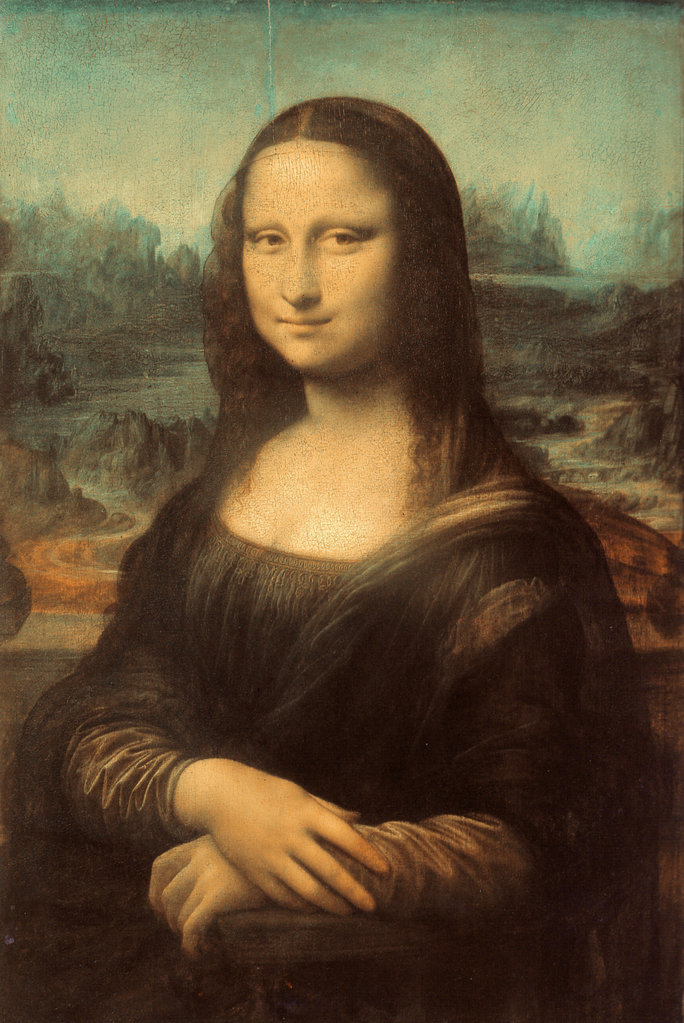
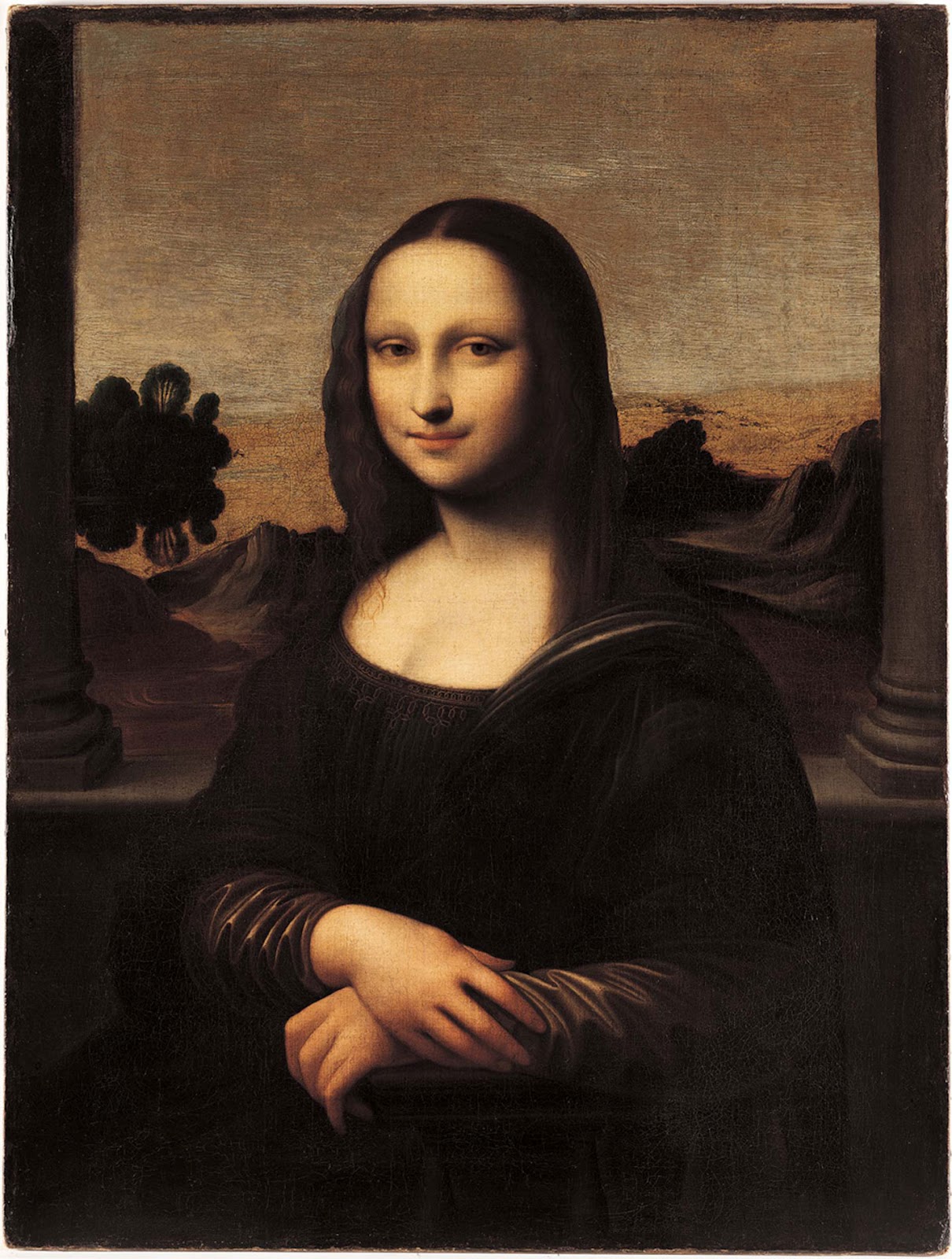
I am always fascinated with discoveries being made in the art world. And these past few weeks have been full of juicy thoughts with the "discovery" of a new painting from a master. Recently, people claim that a new Leonardo da Vinci has been discovered, a younger, fresher faced Mona Lisa called the Isleworth Mona Lisa.
It is exciting, there is a newly found word from a master. But is it real? Did da Vinci paint the Isleworth Mona Lisa? Is it a cleaver forgery from a contemporary?
How would you go about proving your theory? Research - a necessity if one aims to be a good writer. You have to know your facts before you can write about anything. There are plus and minus aspects to research though.
Where does one go to research art authentication/forgery? Anyone can get online and get facts. Whether those facts are correct is another matter. While the internet is good for gathering quick information, you have to ask yourself if it is reliable. Do you trust the source? How many websites did you investigate?
I believe that every writer needs to use a mix of sources, least of them being the internet. Books, journals, magazine articles, and people who are familiar with your subject are usually the best way to go. And yes, many journals and magazines are available online - but scholarly material is very different than a tumblr site with an opinion written by a conspiracy theorist.
Writers also need to have a working understanding of their subject. Using the Mona Lisa's as an example, you as the writer need to know about various art techniques and theory. What is the base of the painting? Was there a sketch involved? What paints were used? What about brushstrokes? Lighting? Texture? If the writer does not understand the basics, how can the reader understand them? And what about the reader who is well versed in art? If you do not know your subject, no one will take your work seriously.
Now, there will always be naysayers in whatever subject you chose. Especially when it comes to art, and the art of one of the masters. If a person were to write about these two paintings, the writer would first have to take a side. Say the writer thinks the newly discovered painting is not da Vinci's work. How does the writer tell the reader why it's fake?
Through evidence the writer finds through not only examining the works, but by knowing the era of the known work. The writer needs to convey how the paints were created, what was mixed in the oils to make certain shades. The writer needs to show the differences between the paintings: materials used and techniques. For example, the Mona Lisa was painted on wood, whereas the Isleworth Mona Lisa is painted on canvas.
WRITING EXERCISE: Think of an item, be it art, historical letters, an unfinished manuscript, that has been found. The person/people that have found this item claim it is authentic, an original work worth millions of dollars. How would you go about collecting the evidence to form your own opinion? How would you sway others to believe your argument? Think about the research involved, and outline your approach.
This might lead you to a fascinating tale of intrigue in the art world.
It is exciting, there is a newly found word from a master. But is it real? Did da Vinci paint the Isleworth Mona Lisa? Is it a cleaver forgery from a contemporary?
![]() |
| Mona Lisa |
How would you go about proving your theory? Research - a necessity if one aims to be a good writer. You have to know your facts before you can write about anything. There are plus and minus aspects to research though.
?![]() | |||
| The Isleworth Mona Lisa |
I believe that every writer needs to use a mix of sources, least of them being the internet. Books, journals, magazine articles, and people who are familiar with your subject are usually the best way to go. And yes, many journals and magazines are available online - but scholarly material is very different than a tumblr site with an opinion written by a conspiracy theorist.
Writers also need to have a working understanding of their subject. Using the Mona Lisa's as an example, you as the writer need to know about various art techniques and theory. What is the base of the painting? Was there a sketch involved? What paints were used? What about brushstrokes? Lighting? Texture? If the writer does not understand the basics, how can the reader understand them? And what about the reader who is well versed in art? If you do not know your subject, no one will take your work seriously.
Now, there will always be naysayers in whatever subject you chose. Especially when it comes to art, and the art of one of the masters. If a person were to write about these two paintings, the writer would first have to take a side. Say the writer thinks the newly discovered painting is not da Vinci's work. How does the writer tell the reader why it's fake?
Through evidence the writer finds through not only examining the works, but by knowing the era of the known work. The writer needs to convey how the paints were created, what was mixed in the oils to make certain shades. The writer needs to show the differences between the paintings: materials used and techniques. For example, the Mona Lisa was painted on wood, whereas the Isleworth Mona Lisa is painted on canvas.
WRITING EXERCISE: Think of an item, be it art, historical letters, an unfinished manuscript, that has been found. The person/people that have found this item claim it is authentic, an original work worth millions of dollars. How would you go about collecting the evidence to form your own opinion? How would you sway others to believe your argument? Think about the research involved, and outline your approach.
This might lead you to a fascinating tale of intrigue in the art world.
Subscribe to:
Comments (Atom)