Monday, October 8, 2012

Nose-gasms: Playing with smells

Only the best Sandalwood incense in the world!
To go along with my previous post about touching anything and everything for writing research, I thought I would write about taking another field trip. This time, it's for your nose! Like I said before, I love putting in the little details to make a story richer.

So some afternoon or morning, take a notebook and a pen and get out into nature to smell things. Fall is an excellent time to smell the air and the leaves. Take some time, relax, enjoy the day. This is as much a gathering information/research exercise as it is time to yourself, alone, where you can just be and take it easy. Just let stress fall away.

When you get home make a cup of coffee, tea, or coco and note how it smells, how it makes you feel. Then attack the things in your home that have scents. Note how the litter box smells if you have one, I know it generally stinks but how does it stink?

I think most of my friends know this, but when I was living at home with my parents, and they were still buying the powder laundry detergent, I would stand back by the washer and smell Mountain Spring Tide. It smelled so good! Don't worry, I wasn't huffing it, just smelling it. I don't think it smelled like a mountain spring, but it was nice none the less.

I also used to spray some of my Mom's perfume on my clothes. For some reason my Mom always has the best perfume. So go smell some or aftershave or cologne, see if the smell of it is nostalgic or reminds you of someone. Maybe a new character of yours has a particular scent they love wearing.

Bath and Body Works!
Fennel, I think it has a kind of licorice scent
Go smell your shampoo, dish soap, and lotions. Stick your nose in your books, DVD cases, and refrigerator. Smell herbs at the grocery store, food while it's cooking. you get the point.
Even if you're only gathering notes for now, you'll have this for later. Or you could spend some time researching a scent you know you like or come across and write a short story about it. 

Vocab word of the week


This is one of those words that I could guess the meaning and came to learn it through what I was reading, but after seeing it again in the current book I am reading, I thought it was time to look it up officially. As it turns out, my guess was correct but then again I guess this one is kind of a no brainer


pre·ter·nat·u·ral

   [pree-ter-nach-er-uhl, -nach-ruhl] Show IPA
adjective
1.
out of the ordinary course of natureexceptional orabnormal: preternatural powers.
2.
outside of nature; supernatural.

Sunday, October 7, 2012

A Lesson in Discouragement


In reading Edo Van Belkom's Writing Horror, I have come across a very interesting, though completely logical, idea.  The author of the writing guide talks about how he always tries to discourage amateur writers from continuing seriously in the craft.  His thought process if that if one man can discourage an ambitious writer to abandon their dreams then those weren't really their dreams, were they?  His point in all of this is that, as writers, we will be subjected to massive amounts of criticism, rejection, ridicule, and other forms of discouraging verbal abuse.  A real writer deals with this in whatever way works best (maybe they have a few minutes for a pity party), then they push forward and continue on writing, revising, rewriting, editing, submitting, and preparing themselves for a brand new round of rejection.  


The lesson in all of this, is to persevere.  If you are a writer - a blogger, an essayist, a novelist, a poet, or even an aspiring columnist - then you can't let anyone or any group discourage you from what you really want.  Thicken up your skin if you have to, and keep your rejection letters in a folder that can be easily thrown away when it becomes too overwhelming.  And also remember that rejection doesn't necessarily mean they don't like it - it just means your story is not what they are looking for right now, so either wait until your story is what they are looking for, or send it somewhere else where it will be better received and get your butt going on a new project.  So next time you're in a class, a writing group, an open mic night, or chatting in a forum and someone says that you should throw in the towel, just shrug it off because the only person who can make that decision is you and, if you call yourself a writer, then you've already made your choice.

Amanda LaFantasie (Skoora) © 2012

Prompt - Stanza Story

Sometimes professors have the coolest prompts.

Last week our class was assigned a prompt to write a story based off of a stanza from a famous poem.  So I want to challenge you all to do the same.  The poem we were provided was, "Resurrection of the Dust," by John McKernan, because of copyright issues, I will not be using this poem, but rather a classical work, that has no risk of Copyright infringement. So for this prompt I shall use "The Phoenix and the Turtle," by William Shakespeare.

The purpose of this poem is to choose one stanza. That stanza will be the beginning of your story.  You should challenge yourself by limiting your story to one or two pages.  Practice quick and concise writing, however, if you go over, that is okay too!

The Phoenix and the Turtle
By William Shakespeare
Retrieved from here.

The Phoenix and the Turtle

Let the bird of loudest lay
On the sole Arabian tree,
Herald sad and trumpet be,
To whose sound chaste wings obey.
But thou shrieking harbinger,
Foul precurrer of the fiend,
Augur of the fever's end,
To this troop come thou not near.

From this session interdict
Every fowl of tyrant wing
Save the eagle, feather'd king:
Keep the obsequy so strict.

Let the priest in surplice white
That defunctive music can,
Be the death-divining swan,
Lest the requiem lack his right.

And thou, treble-dated crow,
That thy sable gender mak'st
With the breath thou giv'st and tak'st,
'Mongst our mourners shalt thou go.

Here the anthem doth commence:—
Love and constancy is dead;
Phoenix and the turtle fled
In a mutual flame from hence.

So they loved, as love in twain
Had the essence but in one;
Two distincts, division none;
Number there in love was slain.

Hearts remote, yet not asunder;
Distance, and no space was seen
'Twixt the turtle and his queen:
But in them it were a wonder.

So between them love did shine,
That the turtle saw his right
Flaming in the phoenix' sight;
Either was the other's mine.

Property was thus appall'd,
That the self was not the same;
Single nature's double name
Neither two nor one was call'd.

Reason, in itself confounded,
Saw division grow together;
To themselves yet either neither;
Simple were so well compounded,

That it cried, 'How true a twain
Seemeth this concordant one!
Love hath reason, reason none
If what parts can so remain.'

Whereupon it made this threne
To the phoenix and the dove,
Co-supremes and stars of love,
As chorus to their tragic scene.

THRENOS

BEAUTY, truth, and rarity,
Grace in all simplicity,
Here enclosed in cinders lie.

Death is now the phoenix' nest;
And the turtle's loyal breast
To eternity doth rest,

Leaving no posterity:
'Twas not their infirmity,
It was married chastity.

Truth may seem, but cannot be;
Beauty brag, but 'tis not she;
Truth and beauty buried be.

To this urn let those repair
That are either true or fair;

For these dead birds sigh a prayer. 

Obviously a problem arises in that this is not a modern poem, so your story may take the feel of this poem. Feel free to use the stanza in quote form.  Use it for characterization, whatever purpose you need.  Just have fun with it. If this poem is too difficult, choose a different one. Just keep in mind copyright laws when you do so. 

~Beth

Saturday, October 6, 2012

Naked in Silk: Playing With Sensations

I have a kimono from Japan that I used to wear around my room with nothing underneath. 
One of the things I strive for when writing is in the details. What does the room look like, what does the fabric of the furniture feel like. While that may not seem overly important, I sometimes feel that just a touch of sensation, something the a character notices or feels that's tactile brings a little something extra to a story, makes it a little sweeter or richer. I know I certainly love it when reading a book or a story. I feel like it pulls me further into the character, situation, and setting, builds more of a connection with the world I am looking in on. So in my own writing I try to remember the little things, the even the mundane. Of course for most of it that means research and a field trip day!

Start by touching things in your house from the walls to the coffee maker. Take your clothes out of your closet and molest them shamelessly. Look at the tags and see what they are made of and take notes. Like the note under the picture says, I have a kimono from Japan, and I, when I was thinner, used to get naked and put it on and then go about my business. I declare that silk is one of the softest, soothing fabrics I have ever had the pleasure of wearing/ touching.

After you've played with your household things seek out the elements starting with the basics. Earth, Air, Fire, and Water.

Fire is one of my favorite elements. It warms you when you are cold, provides light, and can entertain. So light a candle and carefully, you don't want to burn yourself, move your fingers over the flame. Watch the flame flicker. If you have a fire place examine how it dances and note how it makes you feel inside. Is there comfort? Is it too hot?
Air is nice as well. Aside from needing it to breathe it can be comforting or annoying. Although you can't see it you certainly can feel it. One of the things I get great pleasure from is lying in my underwear during the early spring and autumn months, when their is a nice breeze, near an open window. I usually like to read then and relax with the breeze blowing over my skin. It's really nice and certainly recommend trying it. I also love sitting outside and letting the wind lift my hair. It's neat to see how the wind plays with the strands.

Water is amazing! Either sitting in a hot tub, warm bath, or a cool pool, it just feels good. to me at least., some people don't like water. But why? Wouldn't that be an interesting character fact? Playing with water from wading in a river, swimming, taking a bath, or filling the sink and just playing with it, take notes on how it feels.


Earth. There are so many things to touch when it comes to earth. Moss, trees from their leaves to their bark. Stones in the sun to those in the shade. Flowers and grass. Take your shoes off and walk in the grass (provided there aren't any stickers those suck). Play in the leaves. One of the things I loved most about working in the family garden when I was younger was playing in dirt. Sure mud is fun, but the dirt was really fun. In the sun it was warm and if it was dry you could grind it down to powder until it was soft. In the shade it was cool and if it was moist it was an interesting texture.

Things in your house and in nature aside there are man made things outside your home that are fun to touch and take note of. Several years ago, when Earth Final Conflict was airing on cable T.V, there was an episode where the Taelons gave a girl who didn't have hands, hands. Real, honest to goodness hands. She was talking to one of the other characters about what she liked to touch the most and she said bricks. I remember thinking that I'd never really paid much attention to bricks so I went outside and felt the bricks along the front of the house. They were rough and at the time they'd been in the sun so they were warm. After that I touched my Dad's car, the big dumpster down the way, and so on. 

So how about an hour or two some afternoon to just touch things? Even if you don't ever put the details in a story, having some fun and just experiencing the different sensations you get from what you feel can be interesting and you might just learn something a little extra about yourself. 


Writing Prompt: Fact or Fiction - Research

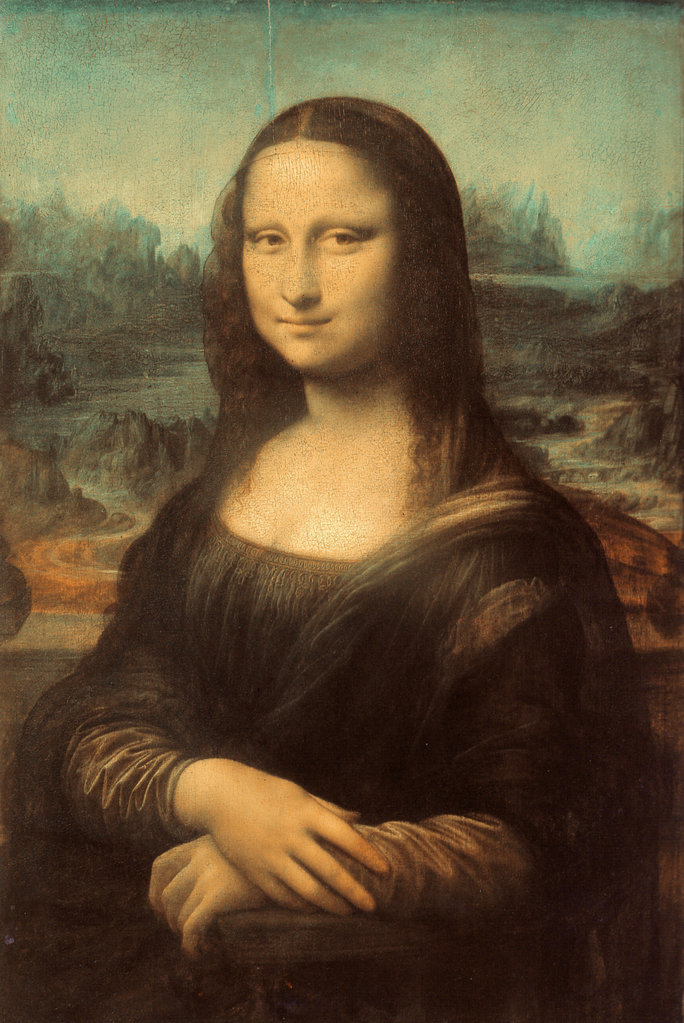
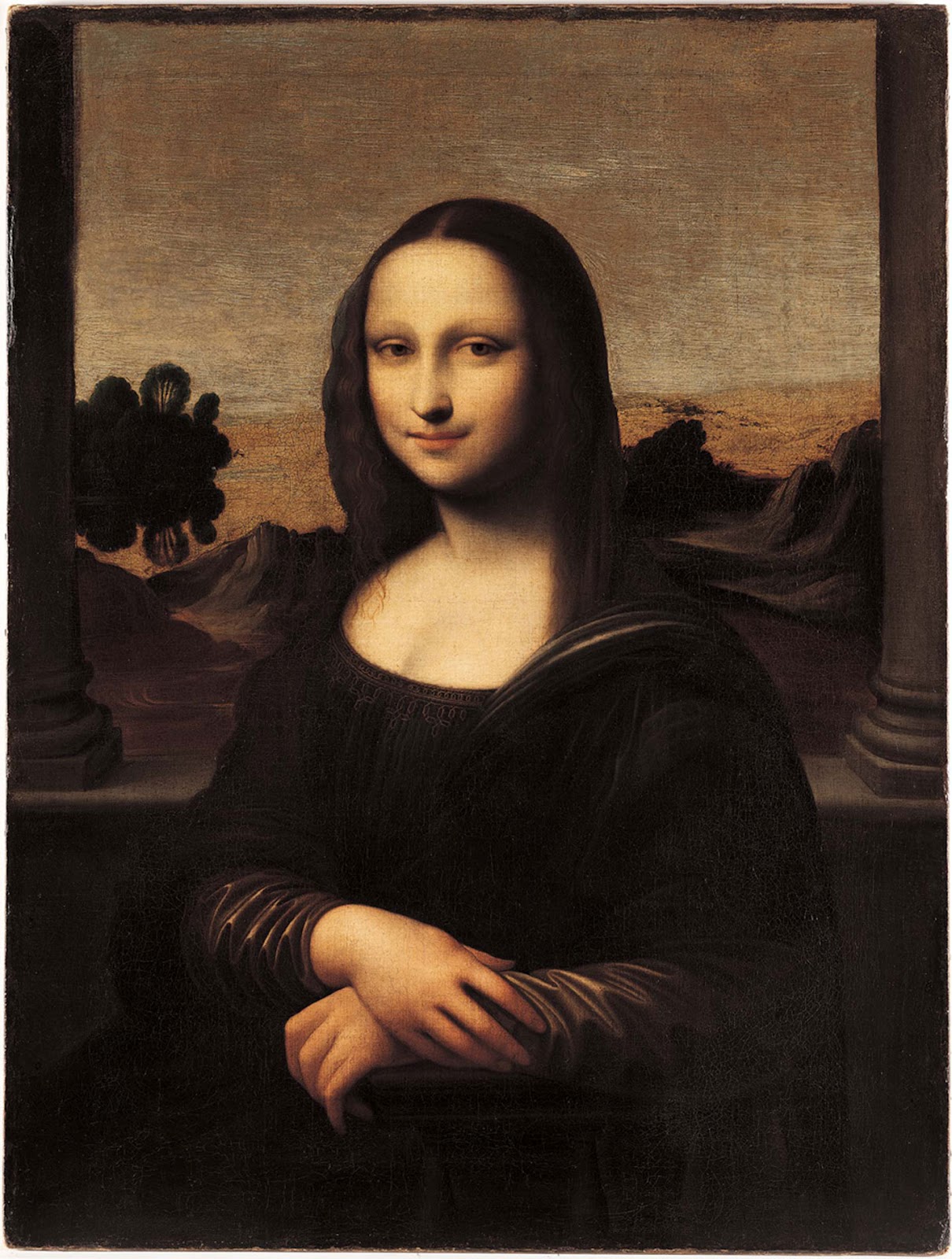
I am always fascinated with discoveries being made in the art world. And these past few weeks have been full of juicy thoughts with the "discovery" of a new painting from a master. Recently, people claim that a new Leonardo da Vinci has been discovered, a younger, fresher faced Mona Lisa called the Isleworth Mona Lisa.

It is exciting, there is a newly found word from a master. But is it real? Did da Vinci paint the Isleworth Mona Lisa? Is it a cleaver forgery from a contemporary?
Mona Lisa

How would you go about proving your theory? Research - a necessity if one aims to be a good writer. You have to know your facts before you can write about anything. There are plus and minus aspects to research though.


?
The Isleworth Mona Lisa


Where does one go to research art authentication/forgery? Anyone can get online and get facts. Whether those facts are correct is another matter. While the internet is good for gathering quick information, you have to ask yourself if it is reliable. Do you trust the source? How many websites did you investigate?

I believe that every writer needs to use a mix of sources, least of them being the internet. Books, journals, magazine articles, and people who are familiar with your subject are usually the best way to go. And yes, many journals and magazines are available online - but scholarly material is very different than a tumblr site with an opinion written by a conspiracy theorist.

Writers also need to have a working understanding of their subject. Using the Mona Lisa's as an example, you as the writer need to know about various art techniques and theory. What is the base of the painting? Was there a sketch involved? What paints were used? What about brushstrokes? Lighting? Texture? If the writer does not understand the basics, how can the reader understand them? And what about the reader who is well versed in art? If you do not know your subject, no one will take your work seriously.

Now, there will always be naysayers in whatever subject you chose. Especially when it comes to art, and the art of one of the masters. If a person were to write about these two paintings, the writer would first have to take a side. Say the writer thinks the newly discovered painting is not da Vinci's work. How does the writer tell the reader why it's fake?

Through evidence the writer finds through not only examining the works, but by knowing the era of the known work. The writer needs to convey how the paints were created, what was mixed in the oils to make certain shades. The writer needs to show the differences between the paintings: materials used and techniques. For example, the Mona Lisa was painted on wood, whereas the Isleworth Mona Lisa is painted on canvas.

WRITING EXERCISE: Think of an item, be it art, historical letters, an unfinished manuscript, that has been found. The person/people that have found this item claim it is authentic, an original work worth millions of dollars. How would you go about collecting the evidence to form your own opinion? How would you sway others to believe your argument? Think about the research involved, and outline your approach.

This might lead you to a fascinating tale of intrigue in the art world.  


Friday, October 5, 2012

Just a short note about reading.


You know how in middle school, high school, and college you have to read a ton of text books, books off the required reading list, and stuff your teachers make you read? Well as an adult, aside from things having to do with work, you can read anything you want. ANYTHING!

When I was growing up my Grandmother read me kids books and biographies about historical people. My Mother read my fairy tales and kids books and my Father read my The Hobbit and Lord of the Rings. And they read to me almost nightly until I was reading on my own. But I had trouble reading because I have dyslexia and reading out loud was a nightmare and you know every teacher just loves to make kids read out loud. So I began to hate books and it took until I was in middle school before I began to love them again. 

I started out reading the William Allen White and other award winning books. They were nice and some I really loved but they weren't quite, exactly what I craved. 

In High school, for the first three years of English classes I liked all the required reading but when it I got to senior year, English comp college reading, I wanted to slap my teacher every class period. She picked out the worst books ever! And when it came time for college, it didn't get any better. Thankfully, I'd been seeking out books on my own and I was lucky enough to get a weekly trip to the bookstore. I read fantasy, I read young adult fantasy and Sci Fi, I read romance, some classics and plays, and some non-fiction too. But I felt kind of bad for not reading the gems of the literary world. 

Well as is turns out, like in all genre fiction, there are crap books in literary too, and when you are a poor, extremely choosy (ehm picky) person, you want to make sure that the book you are reading is worth the money you paid for it. So my point is, if there is something that you love to read from shameless, raunchy erotica to the most snooty of mainstream literature, READ IT and don't feel bad for it for goodness sake don't let anyone make you feel less for what turns your crank in the reading sense.