Language. What is it? A grouping of words, symbols, signs, gestures, and sounds used to communicate. Language is used everyday, from speaking to people, texting, computer programming, the posting of pictures, and so on. Suffice to say, language is important to know and understand the world around us.
But what about created worlds? What about the races and places that writers create? How do these people communicate? It is easy for an author to use their native tongue when their characters speak and think. I don't find anything wrong with that. It is easy - for some - to translate a few sentences into a different language. I do that constantly, changing English to Latin, French, Italian, and Russian. But I am a language nerd. I love various languages.
However, in my creation of worlds and races, I have backed myself into a wall of sorts. I have elves, vampires, sorcerers, witches, and so on. Each of these races have their own histories, and therefore, they need their own languages. But, how do I go about creating various languages for my races, without it sounding alien?
Tolkien is a great inspiration for language creation. Using the Elder Futhark Runes, he fashioned the Uruk Runes spoken by the Uruk-hai. The Cirth Runes - language of the Dwarves - is based upon the Anglo Saxon runic alphabet.
By following Tolkien's example, I am in the midst of creating a few languages for my various races. I am in the middle of creating a history for my vampire race. Finally figuring out where my vampires originated from, I can now use the languages from that area to create my own. For my vampires, I am mixing Elder Futhark Runes, the Lepontic (Lugano) language, and Ogham. I think that what I come up with will be fantastic, but it will take a lot of hard work.
http://www.omniglot.com/index.htm This is fantastic website all about languages. Omniglot is the online encyclopedia of writing systems and languages. It has sections on phonetics, different writing systems, and sections about conlangs - constructed languages.
Here is to making the created world a little more complete, with a language of their own.
Showing posts with label Aimeeelizabeth. Show all posts
Showing posts with label Aimeeelizabeth. Show all posts
Wednesday, August 21, 2013

Sunday, June 2, 2013
A Conundrum of Sorts
What do you do when you have a really good idea, one that has been constantly jumping to the forefront of your mind whenever you sit down to write, but you have already written something similar?
This is what I am going through right now. The first book I wrote for NaNoWriMo was a post apocalyptic/population reducing novel with supernatural elements - vampires, fae, were-critters. When I wrote it, the story took on a life of its own. I had something else in mind, but the characters decided to do their own thing. However, the original idea I had is roaring at me. The finished book is the first in a series, because I have a ton of characters and have written half of the second book.
So the question is this: Do I write the original idea? Would it be weird if I wrote another post apocalyptic series that has similar elements to the one I have already done, or should I forget it? The original idea was darker than what I eventually wrote, and honestly, I think I took the easy road for that book since it was my first foray into NaNoWriMo. But that story is good. It's finished and there are so many possibilities for future books.
I am going to give my original idea a whirl. I am going to attempt to do the July session of Camp NaNo and flush out the idea and not let the characters run rampant as they usually do. I want to see where this idea takes me. I believe that this will be a good exercise for me; to write something close to what I have done already, but make it different.
So, what would you do? Would you scrap the original idea, or the one that took its place? Would you do what I am going to attempt and see where that idea could have taken you?
It's a conundrum. Really one that only the author can decide.
This is what I am going through right now. The first book I wrote for NaNoWriMo was a post apocalyptic/population reducing novel with supernatural elements - vampires, fae, were-critters. When I wrote it, the story took on a life of its own. I had something else in mind, but the characters decided to do their own thing. However, the original idea I had is roaring at me. The finished book is the first in a series, because I have a ton of characters and have written half of the second book.
So the question is this: Do I write the original idea? Would it be weird if I wrote another post apocalyptic series that has similar elements to the one I have already done, or should I forget it? The original idea was darker than what I eventually wrote, and honestly, I think I took the easy road for that book since it was my first foray into NaNoWriMo. But that story is good. It's finished and there are so many possibilities for future books.
I am going to give my original idea a whirl. I am going to attempt to do the July session of Camp NaNo and flush out the idea and not let the characters run rampant as they usually do. I want to see where this idea takes me. I believe that this will be a good exercise for me; to write something close to what I have done already, but make it different.
So, what would you do? Would you scrap the original idea, or the one that took its place? Would you do what I am going to attempt and see where that idea could have taken you?
It's a conundrum. Really one that only the author can decide.
Thursday, April 4, 2013
Editing: The Saga Continues
Editing. That is what I have been doing for the past couple of months. A necessary evil, but ultimately worth the trouble.
And for this one I really needed it. I didn't have too many issues with grammar or tense. A few issues with word choice: but & and & well. (I blame my love of Doctor Who for that.)
My two main problems: character that disappear in the middle of the book and a character that I originally had alive but then killed off.
The first one is not difficult to deal with. Go in and find where you left off with them, and see if they fit in any other place. If not, give them a rousing exit. The second one though, wow. I obviously missed chunks of this character. The reason I had the character alive to begin with was to show a couple of things. I write urban fantasy, so with the characters I am dealing with run the gamut from demon to elf to Elementals. Long story short: I had two Elementals kidnapped by demons, leaving behind their two year old daughter that saw everything. Now, some 300 years after the fact, the daughter is looking for her parents. When I first wrote about the parents, this is 300 yrs later, I had both of them still alive. Then I thought that was too clean, too easy, so I decided that I should kill the mother. Not a problem. Until you miss scenes in the rewriting process, keeping her alive.
This is where a REALLY good reader/editor/person that won't hold back come in handy. I sent my novel to a friend to read. She is brilliant, and caught what I did wrong and offered suggestions. She knows these characters, because she has read everything I have written about them. She pointed out the glaring mistake, and then said that she liked the character I killed off.
Hmmm. What to do? After months of thinking, I figured it out. I will keep her alive, but have her separated from her husband. Thereby leading to more angst and motivation for various characters. Problem solved, more avenues to pursue, more headaches...
Editing, though a pain in the butt, can be very rewarding. And having someone you trust give you feedback is very important. The point, no matter what you write, be it UF, SciFi, mystery, non fiction, find someone that knows how you write and what you write. That alone makes a world of difference along the editing path.
And for this one I really needed it. I didn't have too many issues with grammar or tense. A few issues with word choice: but & and & well. (I blame my love of Doctor Who for that.)
My two main problems: character that disappear in the middle of the book and a character that I originally had alive but then killed off.
The first one is not difficult to deal with. Go in and find where you left off with them, and see if they fit in any other place. If not, give them a rousing exit. The second one though, wow. I obviously missed chunks of this character. The reason I had the character alive to begin with was to show a couple of things. I write urban fantasy, so with the characters I am dealing with run the gamut from demon to elf to Elementals. Long story short: I had two Elementals kidnapped by demons, leaving behind their two year old daughter that saw everything. Now, some 300 years after the fact, the daughter is looking for her parents. When I first wrote about the parents, this is 300 yrs later, I had both of them still alive. Then I thought that was too clean, too easy, so I decided that I should kill the mother. Not a problem. Until you miss scenes in the rewriting process, keeping her alive.
This is where a REALLY good reader/editor/person that won't hold back come in handy. I sent my novel to a friend to read. She is brilliant, and caught what I did wrong and offered suggestions. She knows these characters, because she has read everything I have written about them. She pointed out the glaring mistake, and then said that she liked the character I killed off.
Hmmm. What to do? After months of thinking, I figured it out. I will keep her alive, but have her separated from her husband. Thereby leading to more angst and motivation for various characters. Problem solved, more avenues to pursue, more headaches...
Editing, though a pain in the butt, can be very rewarding. And having someone you trust give you feedback is very important. The point, no matter what you write, be it UF, SciFi, mystery, non fiction, find someone that knows how you write and what you write. That alone makes a world of difference along the editing path.
Monday, November 5, 2012
Homework Update: Back it Up, Baby
One of the things I have trouble with is backing up my work. I tell myself to do it every time I write, but then distraction takes over and I forget. Again and again.
But this year for NaNoWriMo, I am the backup queen. I have been emailing my book to myself, as well as having my work on two hard drives and a jump drive.
I just got my baby laptop back. The hard drive went caput on me. Two hard drives have taken my work from me. And I am bound and determined not to let that happen again.
So join me in the backing up of your work, no matter what it is. It takes little time to do it, and it will save you a lot of heartache if something dreadful does happen.
But this year for NaNoWriMo, I am the backup queen. I have been emailing my book to myself, as well as having my work on two hard drives and a jump drive.
I just got my baby laptop back. The hard drive went caput on me. Two hard drives have taken my work from me. And I am bound and determined not to let that happen again.
So join me in the backing up of your work, no matter what it is. It takes little time to do it, and it will save you a lot of heartache if something dreadful does happen.
STOP! NaNoWriMo Time!
So many people I know are pulling their hair out already, and I have to wonder why. For those of you that are not a member of the self torture club known as NaNoWriMo, let me explain. The goal is to write at least 50,000 words in a month. No, it can't be the same word 50,000 times. The purpose of this month of writing abandon is to make yourself write. To turn off the inner editor and get the words out on paper, or in most cases, the hard drive. You can write whatever you want: fiction, short stories, non fiction, exceedingly long poems.
Many of my friends sign up to do this year after year. For me, this is my fifth year, and I have won every year. I have never had a problem with just sitting with the laptop and letting my fingers tell a story. I have a rough idea and I let it take me where it wants to go. So why are my friends having so much trouble?
I think one of the problems people have is the anticipation for the game to start. They have their notebook or flashcards filled to the brim with ideas and characters and amazing plot lines. They get 5,000 words or so in and BAM. Roadblock. And they don't know how to back up and go another direction.
I admit that I get stuck occasionally. I write myself into a corner and have to stop and wonder what I just did. And sometimes that happens at 3 in the morning. So I hit "enter" a few times and get going again. I go with another character or a situation. I keep moving forward with the story, even if I now have to take the dirt road with all the bumps and dips. I'll still get to point "B," I've just decided to take the scenic route.
The point is to not get discouraged and throw in the towel. There are 30 days in the month. Plenty of time to get back on track. And don't let the word count of others bother you. If you can only manage 2,000 words a day, you're still above the daily average. I am a person who writes at a fast pace and finish with my 50,000 words pretty early in the month. But I still keep going along with the story. I can't leave my little babies hanging. And if I can help others that are struggling, all the better.
Just keep going and don't get discouraged. Before you know it you will cross the finish line and will have a goofy grin on your face. And then you will sleep soundly, knowing that you did something that not many people can do. You will have created something that came from your own imagination, your own experiences, and your own knowledge. And that is something to be very proud of.
Many of my friends sign up to do this year after year. For me, this is my fifth year, and I have won every year. I have never had a problem with just sitting with the laptop and letting my fingers tell a story. I have a rough idea and I let it take me where it wants to go. So why are my friends having so much trouble?
I think one of the problems people have is the anticipation for the game to start. They have their notebook or flashcards filled to the brim with ideas and characters and amazing plot lines. They get 5,000 words or so in and BAM. Roadblock. And they don't know how to back up and go another direction.
I admit that I get stuck occasionally. I write myself into a corner and have to stop and wonder what I just did. And sometimes that happens at 3 in the morning. So I hit "enter" a few times and get going again. I go with another character or a situation. I keep moving forward with the story, even if I now have to take the dirt road with all the bumps and dips. I'll still get to point "B," I've just decided to take the scenic route.
The point is to not get discouraged and throw in the towel. There are 30 days in the month. Plenty of time to get back on track. And don't let the word count of others bother you. If you can only manage 2,000 words a day, you're still above the daily average. I am a person who writes at a fast pace and finish with my 50,000 words pretty early in the month. But I still keep going along with the story. I can't leave my little babies hanging. And if I can help others that are struggling, all the better.
Just keep going and don't get discouraged. Before you know it you will cross the finish line and will have a goofy grin on your face. And then you will sleep soundly, knowing that you did something that not many people can do. You will have created something that came from your own imagination, your own experiences, and your own knowledge. And that is something to be very proud of.
Saturday, October 6, 2012
Writing Prompt: Fact or Fiction - Research
I am always fascinated with discoveries being made in the art world. And these past few weeks have been full of juicy thoughts with the "discovery" of a new painting from a master. Recently, people claim that a new Leonardo da Vinci has been discovered, a younger, fresher faced Mona Lisa called the Isleworth Mona Lisa.
It is exciting, there is a newly found word from a master. But is it real? Did da Vinci paint the Isleworth Mona Lisa? Is it a cleaver forgery from a contemporary?
How would you go about proving your theory? Research - a necessity if one aims to be a good writer. You have to know your facts before you can write about anything. There are plus and minus aspects to research though.
Where does one go to research art authentication/forgery? Anyone can get online and get facts. Whether those facts are correct is another matter. While the internet is good for gathering quick information, you have to ask yourself if it is reliable. Do you trust the source? How many websites did you investigate?
I believe that every writer needs to use a mix of sources, least of them being the internet. Books, journals, magazine articles, and people who are familiar with your subject are usually the best way to go. And yes, many journals and magazines are available online - but scholarly material is very different than a tumblr site with an opinion written by a conspiracy theorist.
Writers also need to have a working understanding of their subject. Using the Mona Lisa's as an example, you as the writer need to know about various art techniques and theory. What is the base of the painting? Was there a sketch involved? What paints were used? What about brushstrokes? Lighting? Texture? If the writer does not understand the basics, how can the reader understand them? And what about the reader who is well versed in art? If you do not know your subject, no one will take your work seriously.
Now, there will always be naysayers in whatever subject you chose. Especially when it comes to art, and the art of one of the masters. If a person were to write about these two paintings, the writer would first have to take a side. Say the writer thinks the newly discovered painting is not da Vinci's work. How does the writer tell the reader why it's fake?
Through evidence the writer finds through not only examining the works, but by knowing the era of the known work. The writer needs to convey how the paints were created, what was mixed in the oils to make certain shades. The writer needs to show the differences between the paintings: materials used and techniques. For example, the Mona Lisa was painted on wood, whereas the Isleworth Mona Lisa is painted on canvas.
WRITING EXERCISE: Think of an item, be it art, historical letters, an unfinished manuscript, that has been found. The person/people that have found this item claim it is authentic, an original work worth millions of dollars. How would you go about collecting the evidence to form your own opinion? How would you sway others to believe your argument? Think about the research involved, and outline your approach.
This might lead you to a fascinating tale of intrigue in the art world.
It is exciting, there is a newly found word from a master. But is it real? Did da Vinci paint the Isleworth Mona Lisa? Is it a cleaver forgery from a contemporary?
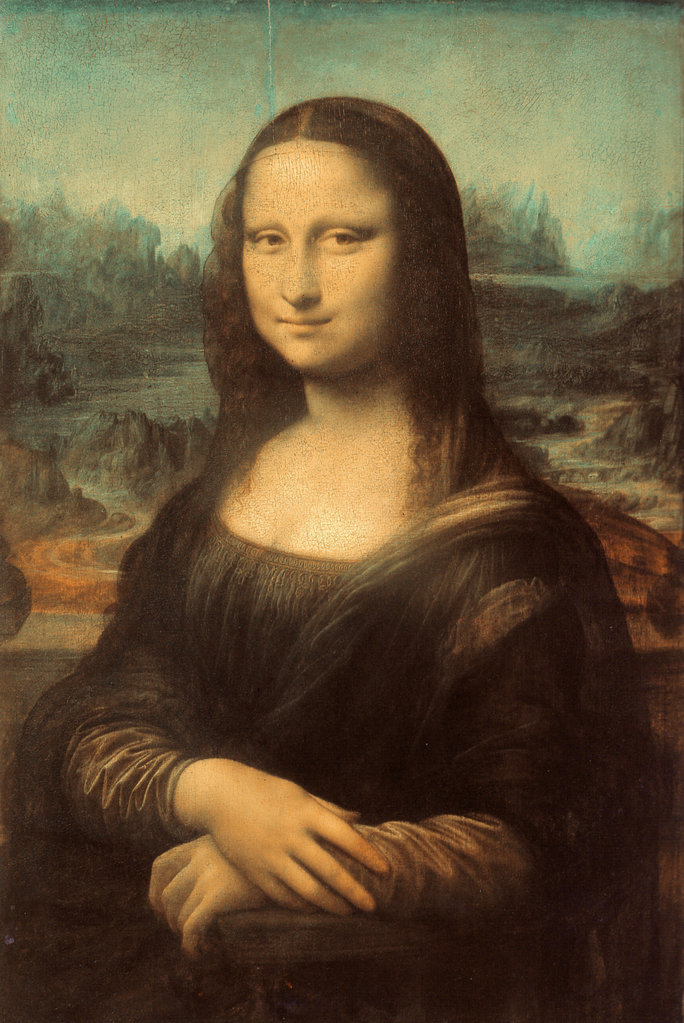 |
| Mona Lisa |
How would you go about proving your theory? Research - a necessity if one aims to be a good writer. You have to know your facts before you can write about anything. There are plus and minus aspects to research though.
?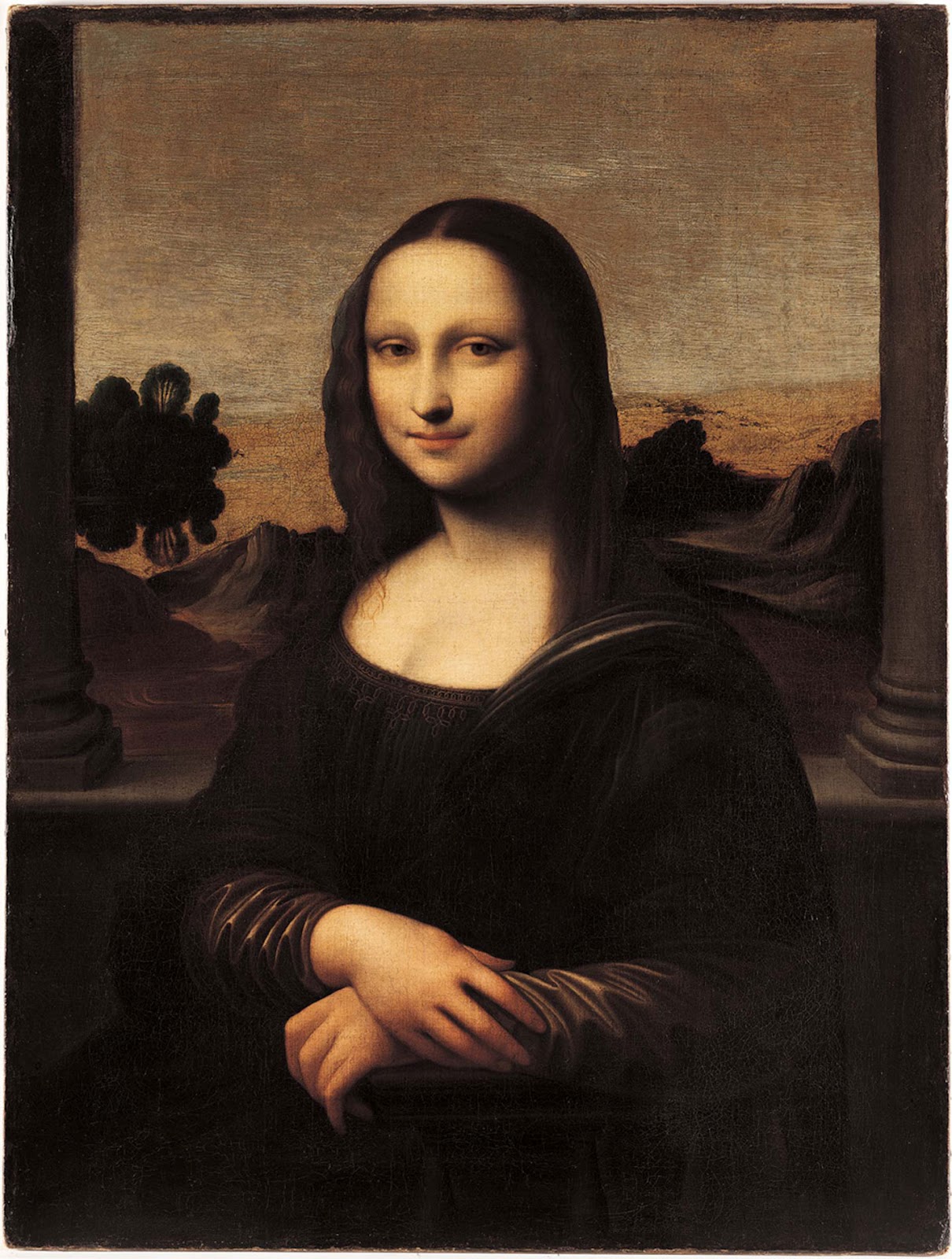 | |||
| The Isleworth Mona Lisa |
I believe that every writer needs to use a mix of sources, least of them being the internet. Books, journals, magazine articles, and people who are familiar with your subject are usually the best way to go. And yes, many journals and magazines are available online - but scholarly material is very different than a tumblr site with an opinion written by a conspiracy theorist.
Writers also need to have a working understanding of their subject. Using the Mona Lisa's as an example, you as the writer need to know about various art techniques and theory. What is the base of the painting? Was there a sketch involved? What paints were used? What about brushstrokes? Lighting? Texture? If the writer does not understand the basics, how can the reader understand them? And what about the reader who is well versed in art? If you do not know your subject, no one will take your work seriously.
Now, there will always be naysayers in whatever subject you chose. Especially when it comes to art, and the art of one of the masters. If a person were to write about these two paintings, the writer would first have to take a side. Say the writer thinks the newly discovered painting is not da Vinci's work. How does the writer tell the reader why it's fake?
Through evidence the writer finds through not only examining the works, but by knowing the era of the known work. The writer needs to convey how the paints were created, what was mixed in the oils to make certain shades. The writer needs to show the differences between the paintings: materials used and techniques. For example, the Mona Lisa was painted on wood, whereas the Isleworth Mona Lisa is painted on canvas.
WRITING EXERCISE: Think of an item, be it art, historical letters, an unfinished manuscript, that has been found. The person/people that have found this item claim it is authentic, an original work worth millions of dollars. How would you go about collecting the evidence to form your own opinion? How would you sway others to believe your argument? Think about the research involved, and outline your approach.
This might lead you to a fascinating tale of intrigue in the art world.
Saturday, September 1, 2012
Aimee's writing prompt 1.
Think of all of the random objects we use everyday. Craft items, tools, utensils. Or think of all of the knick-knacks that we all seem to accumulate over the years: decorative boxes, resin figures, dolls, toys.
Now imagine that you are an archaeologist a thousand years in the future, and you are examining these odds and ends. You do not know what they are, how they were used, or why people had them. It is your job to figure out the reason behind, let's say, the infamous rubber duck.
Write about a few of these items, re-imagining their uses and purposes.
Now imagine that you are an archaeologist a thousand years in the future, and you are examining these odds and ends. You do not know what they are, how they were used, or why people had them. It is your job to figure out the reason behind, let's say, the infamous rubber duck.
Write about a few of these items, re-imagining their uses and purposes.
Friday, August 24, 2012
The List is the Thing
A short list of what I believe I need to work on, not only to make my writing better, but to also make other aspects of my life better.
1. Remember that it does not have to be perfect. I have a real problem with perfection. I know that nothing is perfect, and everything that is written is open to criticism, but there is that little voice in the back of my mind telling me that it could be just a little bit better. I need to learn that when the people who have read my stuff say that it is good, and that they would not change or add anything, that they are telling me to stop tinkering.
2. I need to be more organized. I have research materials everywhere - be it books, notes, printed off material, or things stored on my computer. While the books are easy to find, everything else ends up as a game of hide and seek, but you will never find. I have gotten better, keeping notes and research for projects in their own folders, but then I lose the folder.
3. Remembering to backup everything. I have lost two computers to hardware failure. I remembered to back things up the second time. When I think about it I email my projects to a special email address I have set up just for my writing. I also have an external hard drive, but backing up means remembering to backup.
4. I want to branch out into different genres. Right now I write urban fantasy. I deal with elves, vampires, various were critters, and so on. I make my own worlds in this world, and create my races the way I think they should be, not what is canon. I would really like to do some kind of suspense writing, as well as some young adult novels.
5. I want to be published. I have visions of sitting in a book store, signing my novels and chatting with people who are interested in the little worlds I have created. But should I self publish? Look for an agent to do all of the nitty gritty for me? Sign with a big house and let them own my creations for a specified amount of time? Those are the main issues I have right now.
6. I would like to be better at self editing. Honestly, I do not do a whole lot of editing after I finish a book. I edit as I go, taking out things that I wrote at three in the morning, or adding something that I think is brilliant. But once I finish, I'm done. I'll read through it a few weeks later and decide that I need to add more, but I never take away. Mind you, my novels tend to be upwards of 150,000 words, because I have a lot of characters and a lot of action. Do I kill my little darlings? Yes and no. But I am stubborn, and if I think it needs to be there, it will be there.
7. I need to let more people read my stuff, even if I don't think I will take their advice. This is a problem for me. I have people that I trust read my stuff. I know that they will tell if it is good, bad, getting there, or what the hell are you thinking. They offer good advice and will answer questions that I have with thoughtful responses. Then there are those people who want to read my work and offer to edit, but they don't read it for the story first. I had one person look at a few pages of the first novel I wrote, and she looked at the first page, took out a pen and drew x's through stuff, without even knowing what the book was about. I do not want someone who thinks that they are brilliant about everything to decimate my work without giving it a chance in the first place.
1. Remember that it does not have to be perfect. I have a real problem with perfection. I know that nothing is perfect, and everything that is written is open to criticism, but there is that little voice in the back of my mind telling me that it could be just a little bit better. I need to learn that when the people who have read my stuff say that it is good, and that they would not change or add anything, that they are telling me to stop tinkering.
2. I need to be more organized. I have research materials everywhere - be it books, notes, printed off material, or things stored on my computer. While the books are easy to find, everything else ends up as a game of hide and seek, but you will never find. I have gotten better, keeping notes and research for projects in their own folders, but then I lose the folder.
3. Remembering to backup everything. I have lost two computers to hardware failure. I remembered to back things up the second time. When I think about it I email my projects to a special email address I have set up just for my writing. I also have an external hard drive, but backing up means remembering to backup.
4. I want to branch out into different genres. Right now I write urban fantasy. I deal with elves, vampires, various were critters, and so on. I make my own worlds in this world, and create my races the way I think they should be, not what is canon. I would really like to do some kind of suspense writing, as well as some young adult novels.
5. I want to be published. I have visions of sitting in a book store, signing my novels and chatting with people who are interested in the little worlds I have created. But should I self publish? Look for an agent to do all of the nitty gritty for me? Sign with a big house and let them own my creations for a specified amount of time? Those are the main issues I have right now.
6. I would like to be better at self editing. Honestly, I do not do a whole lot of editing after I finish a book. I edit as I go, taking out things that I wrote at three in the morning, or adding something that I think is brilliant. But once I finish, I'm done. I'll read through it a few weeks later and decide that I need to add more, but I never take away. Mind you, my novels tend to be upwards of 150,000 words, because I have a lot of characters and a lot of action. Do I kill my little darlings? Yes and no. But I am stubborn, and if I think it needs to be there, it will be there.
7. I need to let more people read my stuff, even if I don't think I will take their advice. This is a problem for me. I have people that I trust read my stuff. I know that they will tell if it is good, bad, getting there, or what the hell are you thinking. They offer good advice and will answer questions that I have with thoughtful responses. Then there are those people who want to read my work and offer to edit, but they don't read it for the story first. I had one person look at a few pages of the first novel I wrote, and she looked at the first page, took out a pen and drew x's through stuff, without even knowing what the book was about. I do not want someone who thinks that they are brilliant about everything to decimate my work without giving it a chance in the first place.
Subscribe to:
Posts (Atom)